Trailers
 EN
EN
 EN
EN
 EN
EN
Description
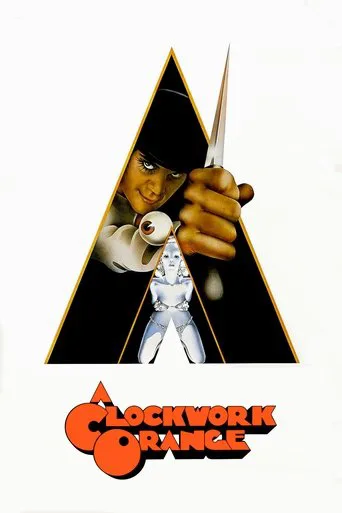
In a near-future Britain, young Alexander DeLarge and his pals get their kicks beating and raping anyone they please. When not destroying the lives of others, Alex swoons to the music of Beethoven. The state, eager to crack down on juvenile crime, gives an incarcerated Alex the option to undergo an invasive procedure that'll rob him of all personal agency. In a time when conscience is a commodity, can Alex change his tune?
Starring
Awards
Key opinion
Stanley Kubrick's adaptation is widely regarded as a visually masterful and thematically profound landmark in cinema that tackles the nature of free will and state control. While critics and audiences alike praise the technical craftsmanship and lead performance, some viewers find the graphic violence and challenging stylistic choices to be an exhausting or polarizing experience.
| Acting | Malcolm McDowell delivers an incredible, career-defining performance that anchors the film's complex moral narrative. | |
| Cinematography | The film demonstrates exceptional technical mastery through refined camerawork and high visual clarity that functions like a photographic exhibition. | |
| Adaptation | Kubrick successfully translates Burgess's supposedly unfilmable novel into a coherent adaptation by utilizing striking visual metaphors. | |
| Score | The integration of classical music creates a powerful and iconic score that elevates the film's intense imagery. | |
| Theme | The film explores deep philosophical inquiries into free will and the dangers of government-sanctioned social conditioning. | |
| Pacing | The film's initial pacing is taxing and difficult to engage with, though many find that investment is rewarded as the narrative progresses. | |
| Screenplay | The use of the invented 'Nadsat' language and absurdist humor divides audiences, with some finding it a brilliant stylistic flourish while others view it as puerile or distracting. |