← Back to results
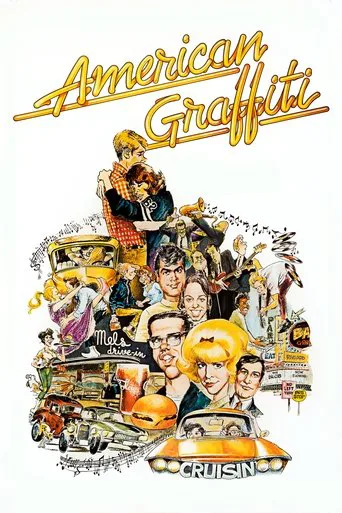
American Graffiti
1973 112 min United States of America PG 18+
★8.1
Comedy, Drama
Director: George Lucas
Trailers
 EN
EN
 EN
EN
 EN
EN
 EN
EN
 EN
EN
 EN
EN
 EN
EN
 EN
EN
 EN
EN
 EN
EN
 EN
EN
Description
A couple of high school graduates spend one final night cruising the strip with their buddies before they go off to college.
Budget:
$777,000
US Gross:
$115M
Worldwide:
$140M
Starring
Richard Dreyfuss
Actor
Ron Howard
Actor
Paul Le Mat
Actor
Awards
Golden Globe 1974
— Best Picture (Comedy or Musical)
Golden Globe 1974
— Best Debut
Golden Globe 1974
— Best Director
Academy Awards 1974
— Best Director
Golden Globe 1974
— Best Debut
BAFTA 1975
— Best Supporting Actress
Academy Awards 1974
— Best Picture
Academy Awards 1974
— Best Supporting Actress
Golden Globe 1974
— Best Actor (Comedy or Musical)
Academy Awards 1974
— Best Adapted Screenplay (Unpublished Material or True Facts)
Key opinion
American Graffiti is widely celebrated as a quintessential, nostalgic portrait of 1960s youth culture and a landmark achievement in George Lucas's early career. While some viewers find its plot structure fragmented or its style dated, most critics praise it as a poignant, atmospheric exploration of the threshold between adolescence and adulthood.
| Theme | The film succeeds as a evocative, semi-autobiographical tribute to early-60s youth culture, effectively capturing the transition from childhood to the uncertainties of adulthood. | |
| Score | The integration of period-accurate rock-and-roll hits and the presence of radio DJ Wolfman Jack creates a powerful, immersive atmosphere that anchors the film's nostalgic tone. | |
| Acting | The film functions as a launching pad for future icons, featuring memorable early performances from actors like Harrison Ford, Ron Howard, and Richard Dreyfuss. | |
| Production | The deliberate use of automobiles as central motifs serves to illustrate the fragile contrast between the sturdy, chrome-plated machines and the vulnerable characters within them. | |
| Screenplay | Viewers are divided on the film's narrative structure; some appreciate the loose, vignette-based collage of a single night, while others find the lack of a traditional, driven plot to be aimless. | |
| Cinematography | Opinions on the film's aesthetic vary, with some finding the stylized night-time visuals timeless, while others perceive the production design and camera work as increasingly dated or stage-like by modern standards. |