← Back to results
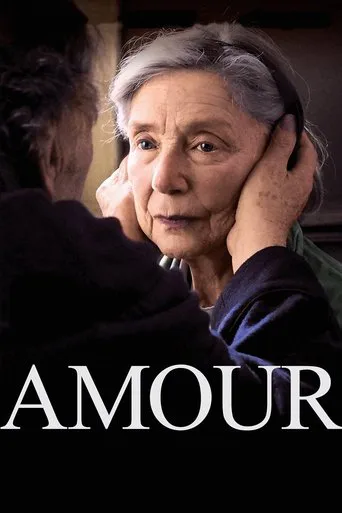
Amour
2012 127 min France, Germany, Austria PG-13 16+
★8.7
Drama, Romance
Director: Michael Haneke
Trailers
 EN
EN
 EN
EN
 EN
EN
 EN
EN
 EN
EN
Description
Georges and Anne are in their eighties. They are cultivated, retired music teachers. Their daughter, who is also a musician, lives abroad with her family. One day, Anne has a stroke, and the couple's bond of love is severely tested.
Budget:
$8.9M
US Gross:
$6.74M
Worldwide:
$29.8M
Starring
Jean-Louis Trintignant
Actor
Emmanuelle Riva
Actor
Isabelle Huppert
Actor
Awards
Golden Globe 2013
— Best International Feature Film
César Awards 2013
— Best Director
César Awards 2013
— Best Picture
Golden Globe 2013
— Best International Feature Film
César Awards 2013
— Best Director
César Awards 2013
— Best Sound
César Awards 2013
— Best Cinematography
César Awards 2013
— Best Picture
César Awards 2013
— Best Actor
European Film Awards 2012
— Best Cinematography
European Film Awards 2012
— Best Actor
César Awards 2013
— Best Actress
César Awards 2013
— Best Film Editing
César Awards 2013
— Best Supporting Actress
European Film Awards 2012
— Best Actress
Academy Awards 2013
— Best International Feature Film
BAFTA 2013
— Best Original Screenplay
European Film Awards 2012
— Best Screenplay
César Awards 2013
— Best Production Design
Cannes Film Festival 2012
— Palme d'Or
BAFTA 2013
— Best International Feature Film
BAFTA 2013
— Best Director
European Film Awards 2012
— Best Director
Academy Awards 2013
— Best Director
Goya Awards 2014
— Best European Film
César Awards 2013
— Best Screenplay
BAFTA 2013
— Best Actress
European Film Awards 2012
— Best Picture
Key opinion
Michael Haneke's Amour is widely considered a masterful, unflinching examination of aging, caregiving, and the endurance of love in the face of inevitable decline. While the vast majority of critics and viewers praise its raw authenticity and the profound lead performances, a small minority finds the film's clinical, restrained approach emotionally cold or spiritually bleak.
| Acting | Emmanuelle Riva and Jean-Louis Trintignant deliver astonishingly authentic performances that anchor the film with profound physical and emotional nuance. | |
| Cinematography | The cinematography and production design utilize a minimalist, realistic aesthetic to create an immersive, intimate atmosphere within the couple's apartment. | |
| Direction | Haneke’s direction is praised for its unflinching, objective gaze, though some viewers find this stylistic distance to be soulless or overly pessimistic. | |
| Pacing | The film's slow, contemplative pacing is hailed by most as a necessary reflection of aging and decline, yet others find the deliberate tempo to be uneventful or exhausting. | |
| Ending | The final act, specifically the ambiguous nature of the husband's actions, serves as a powerful catalyst for debate regarding euthanasia, dignity, and the definition of love. |