← Back to results
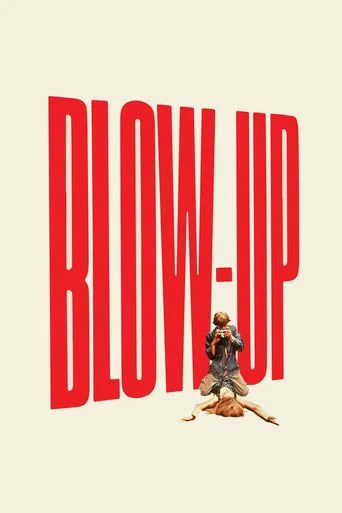
Blow-Up
1966 111 min United Kingdom, United States of America, Italy 18+
★8.1
Drama, Mystery, Thriller
Director: Michelangelo Antonioni
Trailers

 EN
EN
 EN
EN
Description
A successful mod photographer in London whose world is bounded by fashion, pop music, marijuana, and easy sex, feels his life is boring and despairing. But in the course of a single day he unknowingly captures a death on film.
Budget:
$1.8M
Starring
David Hemmings
Actor
Vanessa Redgrave
Actor
Sarah Miles
Actor
Awards
Cannes Film Festival 1967
— Palme d'Or
Academy Awards 1967
— Best Original Screenplay
BAFTA 1968
— Best British Film
Academy Awards 1967
— Best Director
BAFTA 1968
— Best Cinematography (Color)
Cannes Film Festival 1967
— Palme d'Or
Golden Globe 1967
— Best Foreign Film in English
Key opinion
Blow-Up is widely regarded as a modernist masterpiece that uses a detective-thriller premise to explore existential themes of reality, perception, and alienation. While praised for its atmospheric visual language and profound philosophical inquiry, some viewers find its deliberate, slow-burning pace and ambiguous resolution to be pretentious or lacking in traditional narrative payoff.
| Cinematography | Cinematography and production design masterfully evoke the spirit of 1960s London, using color and framing to emphasize the protagonist's detached, vacuous environment. | |
| Acting | David Hemmings delivers a compelling, nuanced performance that effectively captures the protagonist's transition from an arrogant, unlikable playboy to a man suffering a profound existential crisis. | |
| Theme | The film functions as a brilliant philosophical parable on the subjectivity of truth and the helplessness of human perception in the face of an ultimately meaningless world. | |
| Pacing | The narrative's slow, unhurried pace and deliberate lack of traditional answers create a polarizing experience: some find it a meditative and rewarding intellectual exercise, while others perceive it as tedious and emotionally distant. | |
| Ending | The ambiguous ending divides opinion, with some viewers viewing it as a powerful, fitting conclusion to the film's inquiry into illusion, while others find the lack of concrete resolution frustrating and pretentious. |