← Back to results
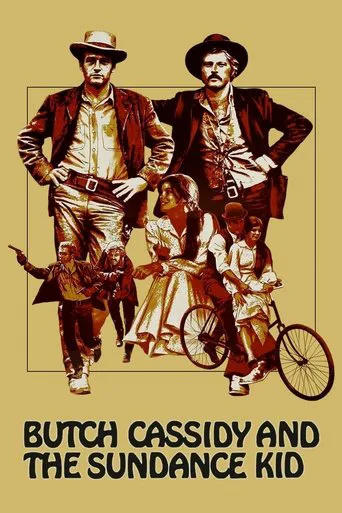
Butch Cassidy and the Sundance Kid
1969 111 min United States of America PG 12+
★8.4
Adventure, Western, Crime, Drama, History
Director: George Roy Hill
Trailers
Description
As the west rapidly becomes civilized, a pair of outlaws in 1890s Wyoming find themselves pursued by a posse and decide to flee to South America in hopes of evading the law.
Budget:
$6M
US Gross:
$102.31M
Worldwide:
$102.31M
Starring
Paul Newman
Actor
Robert Redford
Actor
Katharine Ross
Actor
Awards
Academy Awards 1970
— Best Adapted Screenplay (Unpublished Material or True Facts)
Golden Globe 1970
— Best Original Score
BAFTA 1971
— Best Picture
Academy Awards 1970
— Best Sound
Golden Globe 1970
— Best Original Score
Golden Globe 1970
— Best Picture (Drama)
Golden Globe 1970
— Best Screenplay
Golden Globe 1970
— Best Original Song
BAFTA 1971
— Best Picture
Academy Awards 1970
— Best Score for a Drama
BAFTA 1971
— Best Actress
BAFTA 1971
— Best Director
BAFTA 1971
— Best Screenplay
BAFTA 1971
— Best Cinematography
BAFTA 1971
— Best Original Score
BAFTA 1971
— Best Film Editing
Academy Awards 1970
— Best Cinematography
Academy Awards 1970
— Best Original Song
BAFTA 1971
— Anthony Asquith Award for Film Music
BAFTA 1971
— Best Actor
Key opinion
Butch Cassidy and the Sundance Kid is widely celebrated as a quintessential, revisionist Western that relies on the exceptional chemistry between Paul Newman and Robert Redford. While it is praised for its stylistic cinematography and humor, its blend of genres and intentional pacing occasionally divide viewers.
| Acting | The natural, charismatic rapport between Paul Newman and Robert Redford serves as the film's definitive emotional anchor. | |
| Cinematography | Conrad Hall’s innovative cinematography, particularly the transition from sepia-toned still photography to vibrant color, establishes a unique visual identity. | |
| Originality | The film effectively subverts traditional Western tropes by portraying outlaws as sympathetic, flawed friends rather than standard villains. | |
| Score | Burt Bacharach’s contemporary, nostalgic score is praised by many as an iconic stylistic choice, though others find it distractingly incongruous with the Western setting. | |
| Pacing | The deliberate, contemplative pacing serves to build a heavy, depressive atmosphere for some, while others view it as slow, static, or underdeveloped. | |
| Ending | The ending creates a sharp divide: some appreciate the ambiguous, climactic freeze-frame as a powerful narrative choice, while others are frustrated by the lack of definitive closure. |