← Back to results
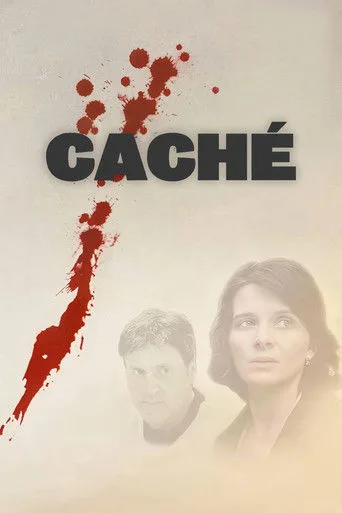
Caché
2005 118 min France, Austria, Germany, Italy R 18+
★7.6
Mystery, Drama, Thriller
Director: Michael Haneke
Trailers
 EN
EN
 EN
EN
 EN
EN
Description
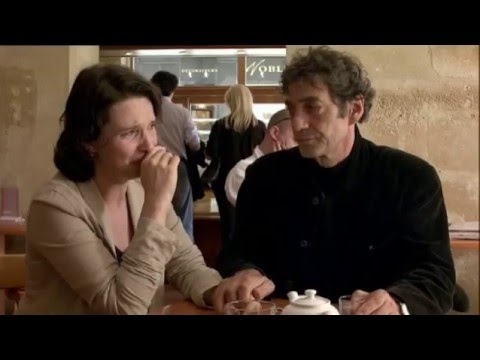
George, host of a television show focusing on literature, receives videos shot on the sly that feature his family, along with disturbing drawings that are difficult to interpret. He has no idea who has made and sent him the videos. Progressively, the contents of the videos become more personal, indicating that the sender has known George for a long time.
Budget:
$8.5M
US Gross:
$3.65M
Worldwide:
$16.2M
Starring
Daniel Auteuil
Actor
Juliette Binoche
Actor
Maurice Bénichou
Actor
Awards
Cannes Film Festival 2005
— Best Director
Cannes Film Festival 2005
— Ecumenical Jury Prize
European Film Awards 2005
— FIPRESCI Prize
Cannes Film Festival 2005
— Ecumenical Jury Prize
European Film Awards 2005
— FIPRESCI Prize
César Awards 2006
— Most Promising Actor
César Awards 2006
— Best Supporting Actor
César Awards 2006
— Best Screenplay
European Film Awards 2005
— Best Picture
European Film Awards 2005
— Best Actor
European Film Awards 2005
— Best Film Editing
European Film Awards 2005
— Best Actress
European Film Awards 2005
— Best Cinematography
European Film Awards 2005
— Best Screenplay
Cannes Film Festival 2005
— FIPRESCI Prize – Competition
European Film Awards 2005
— Best Director
Key opinion
Caché is a masterfully crafted, slow-burning psychological thriller that uses a domestic mystery to interrogate themes of colonial guilt, class, and the fragility of bourgeois comfort. While its refusal to provide traditional answers polarizes viewers expecting standard genre tropes, it is widely praised by critics for its oppressive atmosphere and piercing social critique.
| Score | The absence of a traditional musical score heightens the sense of realism and creates a palpable, suffocating atmosphere. | |
| Acting | Daniel Auteuil and Juliette Binoche deliver strong, nuanced performances that effectively ground the escalating psychological tension. | |
| Direction | Haneke’s clinical, static direction successfully mirrors the detachment and moral blindness of the European bourgeoisie. | |
| Ending | The film’s refusal to resolve the central mystery frustrates audiences seeking a conventional thriller, while others admire the ambiguity as an intentional challenge to viewer assumptions. | |
| Pacing | The deliberate, meditative pacing is experienced by some as a hypnotic immersion into character psychology and by others as an exhausting, plotless exercise. | |
| Theme | The narrative’s shift from an investigative mystery to an abstract exploration of societal guilt is viewed by some as profound social commentary and by others as pretentious obfuscation. |