Trailers
Description
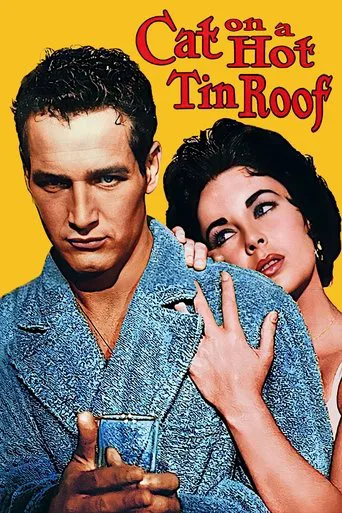
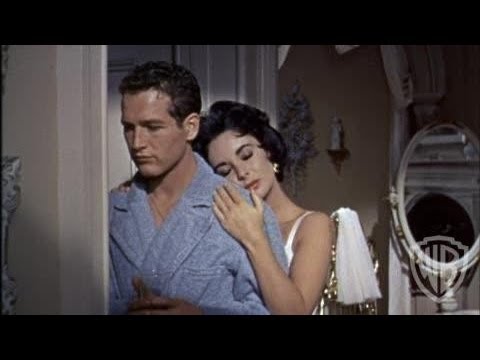
An alcoholic ex-football player drinks his days away, having failed to come to terms with his sexuality and his real feelings for his football buddy who died after an ambiguous accident. His wife is crucified by her desperation to make him desire her: but he resists the affections of his wife. His reunion with his father—who is dying of cancer—jogs a host of memories and revelations for both father and son.
Starring
Awards
Key opinion
Richard Brooks' 1958 adaptation of the Tennessee Williams play is widely hailed as a masterful, emotionally charged chamber drama anchored by the magnetic performances of Elizabeth Taylor and Paul Newman. While some critics lament the softening of the source material's darker themes and the altered conclusion, the film remains celebrated for its intense psychological exploration of family greed, hypocrisy, and the struggle for authentic connection.
| Acting | Elizabeth Taylor delivers a captivating and powerful performance that anchors the emotional weight of the film. | |
| Theme | The film succeeds as a claustrophobic, high-tension study of familial dysfunction and suppressed secrets within a single location. | |
| Direction | Richard Brooks’ direction effectively translates the play into a compelling piece of mid-century cinema, maintaining high tension through sharp dialogue. | |
| Acting | Paul Newman expertly portrays the complex, disillusioned state of a man wrestling with past trauma and alcoholism. | |
| Adaptation | The screenplay is divided: some praise its ability to distill intense human conflict, while others criticize it for diluting the existential tragedy and controversial elements of the original Tennessee Williams play. | |
| Ending | The ending creates debate: some viewers find the resolution cathartic and emotionally satisfying, while others view the softened, positive conclusion as a departure from the play's gritty reality. |