← Back to results
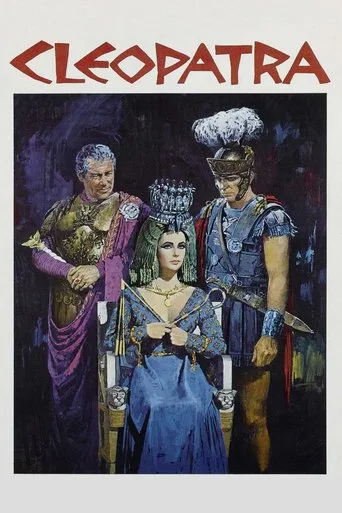
Cleopatra
1963 251 min United Kingdom, United States of America G 12+
★7.4
Drama, History, Romance
Director: Joseph L. Mankiewicz, Rouben Mamoulian
Trailers
 EN
EN
 EN
EN
 EN
EN
 EN
EN
 EN
EN
 EN
EN
 EN
EN
Description
Determined to hold on to the throne, Cleopatra seduces the Roman emperor Julius Caesar. When Caesar is murdered, she redirects her attentions to his general, Marc Antony, who vows to take power—but Caesar’s successor has other plans.
Budget:
$44M
US Gross:
$57.78M
Worldwide:
$57.78M
Starring
Elizabeth Taylor
Actor
Richard Burton
Actor
Rex Harrison
Actor
Awards
Academy Awards 1964
— Best Cinematography (Color)
Academy Awards 1964
— Best Visual Effects
Academy Awards 1964
— Best Production Design (Color)
Academy Awards 1964
— Best Sound
Golden Globe 1964
— Best Actor (Drama)
Golden Globe 1964
— Best Picture (Drama)
Golden Globe 1964
— Best Director
Golden Globe 1964
— Best Supporting Actor
Academy Awards 1964
— Best Production Design (Color)
Academy Awards 1964
— Best Picture
Academy Awards 1964
— Best Actor
Academy Awards 1964
— Best Costume Design (Color)
Academy Awards 1964
— Best Original Score
Key opinion
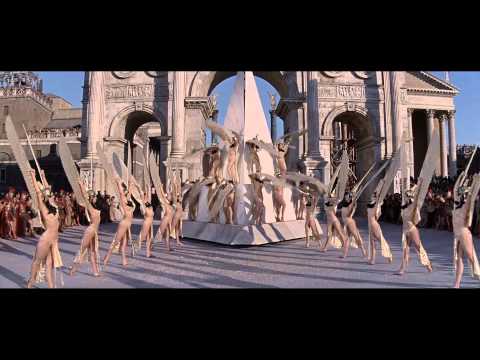
Cleopatra (1963) is widely recognized as a monumental visual achievement characterized by unparalleled production design, lavish costumes, and grand-scale staging. While critics and audiences frequently debate its uneven narrative focus and lengthy runtime, the film remains a landmark of Golden Age Hollywood spectacle.
| Production | The film sets an unmatched standard for period-accurate opulence, featuring massive, intricately detailed sets and costumes that define its visual grandeur. | |
| Acting | Elizabeth Taylor’s portrayal of Cleopatra is largely hailed as a powerful, queenly performance that anchors the film's sprawling narrative. | |
| Runtime | The four-hour runtime is a polarizing factor; proponents view it as an immersive epic experience, while detractors feel the pacing is sluggish and prone to melodrama. | |
| Screenplay | The screenplay faces significant criticism for being overly theatrical, inconsistent in character development, and leaning too heavily on exposition rather than dynamic storytelling. | |
| Acting | Interpretations of the supporting cast's performances are divided, with some finding the portrayal of Roman leaders authoritative and others dismissing them as weak or caricatured. |