Trailers
Description
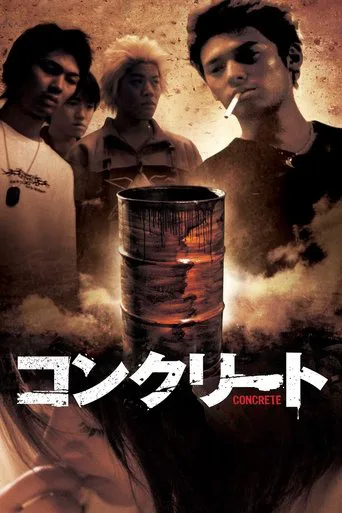
On the 25th of November 1988, four youths abducted and held Furuta Junko in the house of one of the captors. Subjected to rape, torture, and humiliation, Junko had no hope of escape as the manhunt was stalled by the captors forcing her to tell her parents that she was ok. For 41 harrowing days, Junko had to endure unimaginable suffering at the hands of these four individuals. Finally, after losing in a game of mahjong solitaire, they beat her with an iron dumbbell and set on fire with lighter fluid. She died later that day from shock. In an attempt to hide their crime they buried her in cement and thus the name 'Concrete Encased High School Murder Case' was born as Japan had to confront the horrors of this crime. The perpetrators disposed the drum in a tract of reclaimed land in Koto, Tokyo.
Starring
Awards
Key opinion
Tru Calling is viewed as a compelling, albeit formulaic, supernatural drama that gains significant narrative momentum following the introduction of key supporting characters. While many viewers appreciate the lead performance by Eliza Dushku and the show's brisk pace, others find the early procedural structure repetitive and the series' abrupt cancellation frustrating.
| Acting | Eliza Dushku delivers a charismatic and capable lead performance that anchors the series, though some find her portrayal monotonous or less impactful than her later work. | |
| Screenplay | The series structure follows a predictable formula in early episodes that risks feeling stagnant, though it becomes more complex and engaging as the rivalry between Tru and Jack develops. | |
| Pacing | The pacing is considered tight and efficient by fans of the genre, though critics of the episodic loop feel it results in a lack of deeper meaning or logical development. | |
| Score | The musical score, particularly the title track, is consistently highlighted as a high point of the production. | |
| Ending | The abrupt cancellation of the show after a partial second season leaves the narrative without a proper conclusion, a point of significant disappointment for the audience. |