← Back to results
In the House
Dans la maison
2012 105 min France R 16+
★7.6
Comedy, Drama, Mystery, Thriller
Director: François Ozon
Trailers
Description
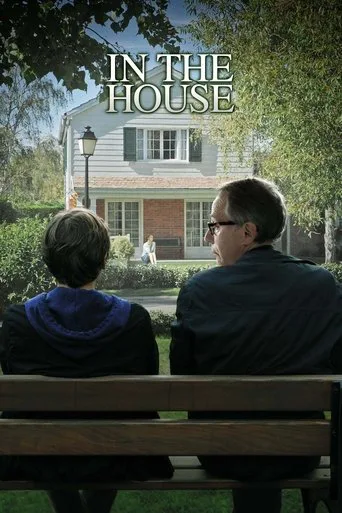
A sixteen-year-old boy insinuates himself into the house of a fellow student from his literature class and writes about it in essays for his French teacher. Faced with this gifted and unusual pupil, the teacher rediscovers his enthusiasm for his work, but the boy’s intrusion will unleash a series of uncontrollable events.
US Gross:
$389,757
Worldwide:
$11.88M
Starring
Fabrice Luchini
Actor
Vincent Schmitt
Actor
Ernst Umhauer
Actor
Awards
European Film Awards 2013
— Best Screenplay
San Sebastián International Film Festival 2012
— Golden Shell
San Sebastián International Film Festival 2012
— Jury Prize – Best Screenplay
César Awards 2013
— Best Adapted Screenplay
European Film Awards 2013
— Best Screenplay
European Film Awards 2013
— Best Actor
César Awards 2013
— Most Promising Actor
San Sebastián International Film Festival 2012
— Golden Shell
San Sebastián International Film Festival 2012
— Jury Prize – Best Screenplay
César Awards 2013
— Best Actor
César Awards 2013
— Best Director
César Awards 2013
— Best Original Score
Key opinion
François Ozon’s 'In the House' is widely regarded as a sophisticated, meta-fictional exploration of voyeurism, storytelling, and the blurred lines between reality and art. While most viewers praise its compelling premise and intellectual depth, a vocal minority finds the narrative cold, the protagonist's motivations underdeveloped, or the ending underwhelming.
| Direction | Ozon demonstrates masterful direction by seamlessly blending reality and fiction to create a hypnotic, meta-textual narrative about the act of storytelling. | |
| Acting | The film features strong, committed performances, particularly from Fabrice Luchini as the disillusioned teacher and Ernst Umhauer as the enigmatic student. | |
| Score | The score is frequently cited as a powerful, atmospheric element that enhances the film's psychological tension and thriller elements. | |
| Theme | The film is highly effective as a cerebral, multi-layered puzzle that challenges the viewer's own role as a voyeur of the characters' lives. | |
| Screenplay | The narrative structure and character motivations divide viewers: supporters find the ambiguity and "to be continued" format engaging, while critics feel the protagonist lacks sufficient development and the plot shifts into absurdity. | |
| Pacing | The three-act structure and pacing create a gripping experience for those drawn to psychological mystery, but others dismiss the film as tedious, pretentious, or lacking in emotional resonance. | |
| Ending | Opinions on the film's conclusion vary; some appreciate the lingering, unresolved questions, while others characterize the finale as predictable or disappointing. |