← Back to results
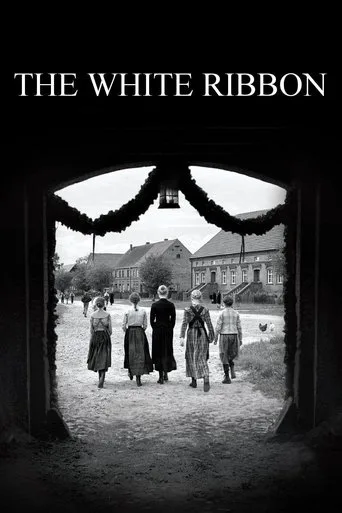
The White Ribbon
Das weiße Band - Eine deutsche Kindergeschichte
2009 144 min Italy, Germany, Austria, France R 18+
★8.1
Drama, Mystery
Director: Michael Haneke
Trailers
Description
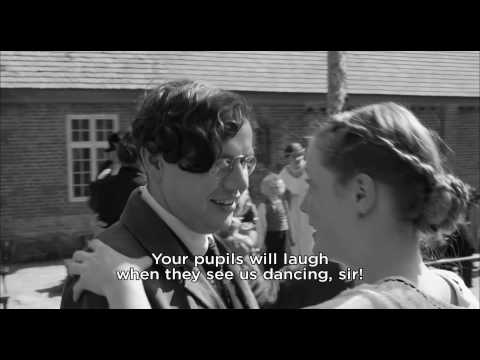
An aged tailor recalls his life as the schoolteacher of a small village in Northern Germany that was struck by a series of strange events in the year leading up to WWI.
Budget:
$21.56M
US Gross:
$2.22M
Worldwide:
$11.65M
Starring
Christian Friedel
Actor
Ernst Jacobi
Actor
Leonie Benesch
Actor
Awards
San Sebastián International Film Festival 2009
— FIPRESCI Prize – Best Film of the Year
Golden Globe 2010
— Best International Feature Film
Cannes Film Festival 2009
— Palme d'Or
Academy Awards 2010
— Best Cinematography
Academy Awards 2010
— Best International Feature Film
Golden Globe 2010
— Best International Feature Film
Cannes Film Festival 2009
— Palme d'Or
César Awards 2010
— Best International Feature Film
Goya Awards 2011
— Best European Film
European Film Awards 2009
— Best Screenplay
Cannes Film Festival 2009
— FIPRESCI Prize – Competition
European Film Awards 2009
— Best Picture
European Film Awards 2009
— Best Director
Key opinion
The White Ribbon is widely regarded as a masterful, chilling exploration of how authoritarianism, religious hypocrisy, and child abuse in early 20th-century Germany laid the psychological groundwork for future societal violence. While many critics praise its aesthetic restraint and deep thematic resonance, a vocal subset of viewers finds the film's cold, detached style and lack of a definitive narrative resolution to be tedious or emotionally distancing.
| Cinematography | The stark, monochrome cinematography effectively creates a repressive, suffocating atmosphere that mirrors the moral decay of the village. | |
| Theme | The thematic depth successfully links the cycle of parental abuse and repression to the inevitable rise of fascist violence in pre-WWI society. | |
| Ending | The film’s decision to withhold a concrete resolution to the central mystery leaves some viewers feeling unsatisfied and frustrated by the lack of closure. | |
| Pacing | The deliberate, slow-burn pacing is perceived by many as hypnotic and essential to the tone, while others criticize it as monotonous and boring. | |
| Acting | Opinions on the performances are divided; some praise the cast for their disciplined, understated portrayals, while others find the acting stiff, robotic, or devoid of human emotion. | |
| Originality | Haneke’s signature stylistic approach is viewed by admirers as a powerful, consistent artistic manifesto, while detractors perceive it as a repetitive, mechanical imitation of his previous work. |