← Back to results
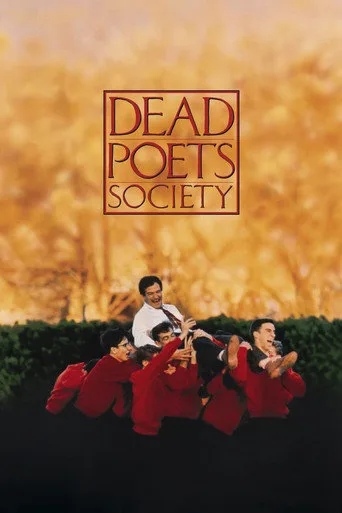
Dead Poets Society
1989 129 min United States of America PG 12+
★8.7
Drama
Director: Peter Weir
Trailers
 EN
EN
 EN
EN
Description
At an elite, old-fashioned boarding school in New England, a passionate English teacher inspires his students to rebel against convention and seize the potential of every day, courting the disdain of the stern headmaster.
Budget:
$16.4M
US Gross:
$95.86M
Worldwide:
$235.86M
Starring
Robin Williams
Actor
Robert Sean Leonard
Actor
Ethan Hawke
Actor
Awards
Academy Awards 1990
— Best Screenplay
César Awards 1991
— Best International Feature Film
BAFTA 1990
— Best Picture
BAFTA 1990
— Best Film Editing
Golden Globe 1990
— Best Actor (Drama)
Academy Awards 1990
— Best Picture
BAFTA 1990
— Best Picture
Academy Awards 1990
— Best Actor
BAFTA 1990
— Best Actor
Academy Awards 1990
— Best Director
Golden Globe 1990
— Best Director
BAFTA 1990
— Best Original Score
Golden Globe 1990
— Best Screenplay
BAFTA 1990
— Best Director
BAFTA 1990
— Best Original Screenplay
Key opinion
Dead Poets Society is widely celebrated as an inspiring and emotionally resonant drama that captures the struggle for individuality against conformist pressure. While most viewers praise its heartfelt performances and thematic depth, a vocal minority finds the narrative to be either a predictable collection of tropes or a detached, idealistic fable.
| Acting | Robin Williams delivers a magnetic, commanding performance that anchors the film's message of self-discovery and intellectual liberation. | |
| Acting | The ensemble cast provides an exceptional and nuanced exploration of teenage growth, effectively portraying the pressure of parental expectations. | |
| Cinematography | The film's visual language—including the exceptional cinematography and seasonal atmosphere—creates a warm, nostalgic, and distinct sense of time and place. | |
| Theme | The screenplay offers a powerful, thought-provoking examination of themes like nonconformity and the tragedy of suppressed potential. | |
| Ending | Opinions on the film's message are polarized; many see it as an essential, life-affirming call to personal growth, while others dismiss the resolution as a cynical validation of institutional authority or a predictable cliche. | |
| Emotion | The narrative's emotional impact is divisive, with many viewers finding it deeply moving and tear-inducing, while others feel alienated by what they perceive as a cold or naive fairy-tale quality. |