Trailers
 EN
EN
 EN
EN
 EN
EN
 EN
EN
 EN
EN
 EN
EN
 EN
EN
 EN
EN
 EN
EN
 EN
EN
 EN
EN
 EN
EN
 EN
EN
 EN
EN
 EN
EN
 EN
EN
 EN
EN
 EN
EN
 EN
EN
 EN
EN
 EN
EN
Description
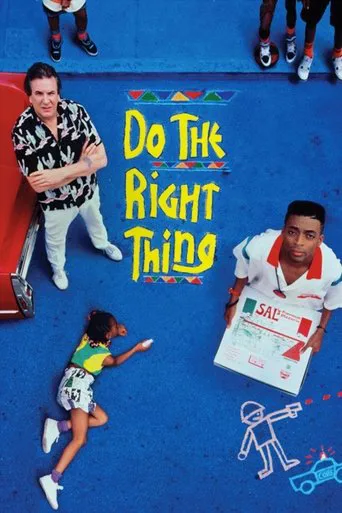
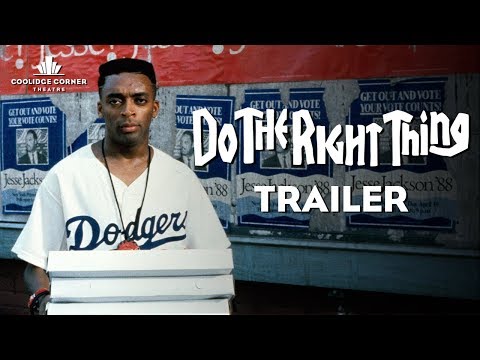
Sal is the Italian owner of a pizzeria in Brooklyn. A neighborhood local, Buggin' Out, becomes upset when he sees that the pizzeria's Wall of Fame exhibits only Italian actors. Buggin' Out believes a pizzeria in a black neighborhood should showcase black actors, but Sal disagrees. The wall becomes a symbol of racism and hate to Buggin' Out and to other people in the neighborhood, and tensions rise.
Starring
Awards
Key opinion
Spike Lee's "Do the Right Thing" is widely regarded as a seminal, technically innovative masterpiece that uses a sweltering Brooklyn neighborhood as a crucible for exploring racial tension. While some viewers criticize the film for relying on stereotypes or find the climactic eruption of violence frustratingly ambiguous, most critics and audiences laud its bold visual style and its ability to provoke complex discourse on social injustice.
| Cinematography | The cinematography and lighting, featuring high-contrast colors and tight close-ups, masterfully translate the oppressive summer heat and psychological tension into a visual experience. | |
| Acting | The performances from the ensemble cast, particularly Danny Aiello and Spike Lee, are consistently praised for providing depth and nuance to their respective roles. | |
| Direction | The film successfully merges disparate tones, transitioning seamlessly from eccentric, farcical comedy into a harrowing, high-stakes social tragedy. | |
| Culture | The soundtrack and cultural aesthetic, anchored by Public Enemy's "Fight the Power," define the film as a quintessential representation of its era and a landmark in rap cinema. | |
| Ending | The narrative's shift from a vibrant community study to an explosive, violent climax is divisive, with some finding the ending a powerful, necessary "brutal honesty" and others seeing it as an unsatisfying or exhausting conclusion. | |
| Theme | While many praise the film's unflinching look at racial dynamics, some critics argue the characterizations rely on two-dimensional tropes and stereotypes that undermine the film's message. |