← Back to results
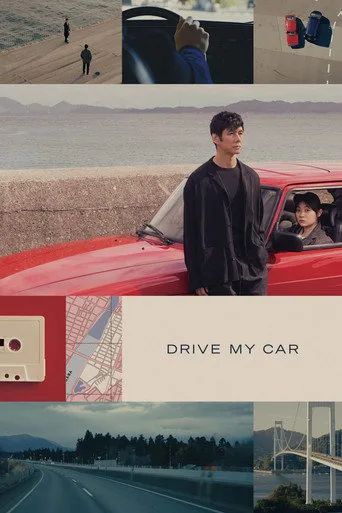
Drive My Car
ドライブ・マイ・カー
2021 179 min Japan 16+
★8.4
Drama
Director: Ryûsuke Hamaguchi
🎭 Based on
«Drive My Car»
byHaruki Murakami
Trailers
 EN
EN
 EN
EN
 EN
EN
 Teaser
 EN
EN
 EN
EN
 EN
EN
 EN
EN
 EN
EN
 EN
EN
 EN
EN
 EN
EN
 EN
EN
 EN
EN
 EN
EN
Description
Yusuke Kafuku, a stage actor and director, still unable, after two years, to cope with the loss of his beloved wife, accepts to direct Uncle Vanya at a theater festival in Hiroshima. There he meets Misaki, an introverted young woman, appointed to drive his car. In between rides, secrets from the past and heartfelt confessions will be unveiled.
Budget:
$1.3M
US Gross:
$2.35M
Worldwide:
$15.36M
Starring
Hidetoshi Nishijima
Actor
Tôko Miura
Actor
Reika Kirishima
Actor
Awards
BAFTA 2022
— Best International Feature Film
Cannes Film Festival 2021
— Best Screenplay
Cannes Film Festival 2021
— Ecumenical Jury Prize
Cannes Film Festival 2021
— Best Screenplay
Cannes Film Festival 2021
— Ecumenical Jury Prize
Academy Awards 2022
— Best Picture
Academy Awards 2022
— Best Director
Asian Film Academy 2023
— Best Director
Asian Film Academy 2023
— Best Actor
Asian Film Academy 2023
— Best Sound
Asian Film Academy 2023
— Best Film Editing
Academy Awards 2022
— Best International Feature Film
Asian Film Academy 2023
— Best Screenplay
BAFTA 2022
— Best Director
Cannes Film Festival 2021
— Palme d'Or
BAFTA 2022
— Best Adapted Screenplay
Asian Film Academy 2023
— Best Original Score
Golden Globe 2022
— Best International Feature Film
Asian Film Academy 2023
— Best Picture
Cannes Film Festival 2021
— FIPRESCI Prize – Competition
Asian Film Academy 2023
— Best Supporting Actor
Key opinion
Drive My Car is a meditative, deeply layered drama that demands patience, rewarding viewers who immerse themselves in its deliberate pacing and thematic complexity. By weaving together Murakami’s storytelling sensibilities with the structural weight of Chekhov’s Uncle Vanya, the film creates a profound exploration of grief, communication, and the persistence of memory.
| Pacing | The film utilizes a deliberate, meditative tempo that functions as a structural mirror to the characters' internal states of grief and introspection. | |
| Direction | Hamaguchi's direction succeeds in weaving together disparate narrative threads—Chekhovian drama, Murakami-esque storytelling, and multilingual theater—into a cohesive whole. | |
| Acting | The central performances provide essential nuance, capturing the complex, often silent emotional interiority of characters grappling with loss. | |
| Runtime | The three-hour runtime acts as a barrier for some, while others find the lengthy, dialogue-heavy scenes vital for building intimacy and emotional resonance. | |
| Adaptation | The integration of Chekhov’s Uncle Vanya is perceived by most as a profound thematic bridge, though a minority find the reliance on the play jarring or disconnected from the core narrative. | |
| Theme | The film’s focus on subtle, culturally specific expressions of grief and infidelity leads some to find deep emotional insight, while others feel a lack of traditional character motivation or developmental depth. |