Trailers
 EN
EN
 EN
EN
 EN
EN
 Teaser
 Teaser
 Teaser
 Teaser
 EN
EN
 EN
EN
 EN
EN
 EN
EN
 EN
EN
 EN
EN
Description
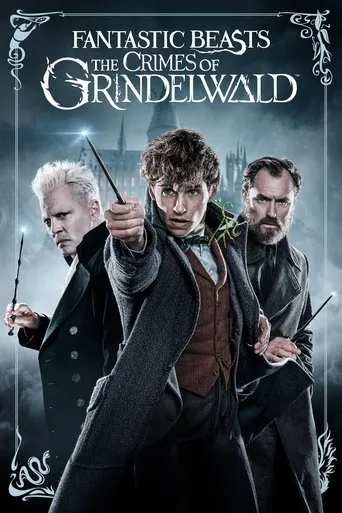
Gellert Grindelwald has escaped imprisonment and has begun gathering followers to his cause—elevating wizards above all non-magical beings. The only one capable of putting a stop to him is the wizard he once called his closest friend, Albus Dumbledore. However, Dumbledore will need to seek help from the wizard who had thwarted Grindelwald once before, his former student Newt Scamander, who agrees to help, unaware of the dangers that lie ahead. Lines are drawn as love and loyalty are tested, even among the truest friends and family, in an increasingly divided wizarding world.
Starring
Awards
Key opinion
Fantastic Beasts: The Crimes of Grindelwald is a visually ambitious expansion of the Wizarding World that receives praise for its production design and lead performances but suffers from a bloated, disjointed screenplay. While many viewers appreciate the aesthetic world-building and character portrayals, the film is widely criticized for its narrative confusion, inconsistencies with established canon, and failure to function as a standalone story.
| Production | The production design, costumes, and magical effects successfully capture a vibrant 1920s atmosphere that effectively expands the visual language of the Harry Potter universe. | |
| Acting | Eddie Redmayne, Jude Law, and Johnny Depp provide strong, charismatic performances that anchor the film despite a chaotic script. | |
| Screenplay | The screenplay is widely criticized for being overloaded with subplots and secondary characters, leading to an experience that feels like a disjointed rough draft rather than a cohesive narrative. | |
| Adaptation | The film frequently contradicts established Harry Potter lore, causing significant frustration among fans who find the retcons and plot holes distracting. | |
| Cinematography | Opinions on the visual presentation are divided; while some applaud the set design and magical effects, others find the dark, blue-black color grading renders action sequences muddy and nearly invisible. | |
| Pacing | The film's pacing and structural focus are divisive; supporters appreciate the deliberate setup for a five-part epic, while critics argue the film lacks a clear climax and feels like a placeholder for future installments. |