Trailers
Description
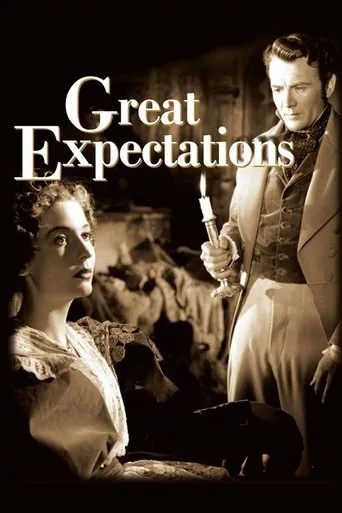
In this Dickens adaptation, orphan Pip discovers through lawyer Mr. Jaggers that a mysterious benefactor wishes to ensure that he becomes a gentleman. Reunited with his childhood patron, Miss Havisham, and his first love, the beautiful but emotionally cold Estella, he discovers that the elderly spinster has gone mad from having been left at the altar as a young woman, and has made her charge into a warped, unfeeling heartbreaker.
Starring
Awards
Key opinion
David Lean’s 1946 adaptation of Great Expectations is widely regarded as a pinnacle of British cinema, celebrated for its atmospheric direction and masterful visual storytelling. While the film is praised for its faithful capture of Dickensian themes and expert production design, it faces criticism regarding its casting choices and significant deviations from the novel's original ending.
| Direction | David Lean’s masterful use of light, shadow, and environmental detail creates an immersive, high-quality atmosphere. | |
| Production | The production design and cinematography are technically brilliant, earning well-deserved industry recognition for their visual execution. | |
| Adaptation | The adaptation effectively translates Dickens’ complex narrative and thematic depth into a coherent, compelling cinematic experience. | |
| Acting | Critics are split on the casting: while performances like Martita Hunt’s Miss Havisham and Bernard Miles’ Joe are lauded, the age-mismatch of John Mills and the perceived lack of charm in Valérie Hobson’s Estella prove distracting to many. | |
| Ending | The alteration of the novel's ending is a point of contention; some see it as a narrative success, while others argue it fundamentally undermines the thematic meaning of the source material. |