← Back to results
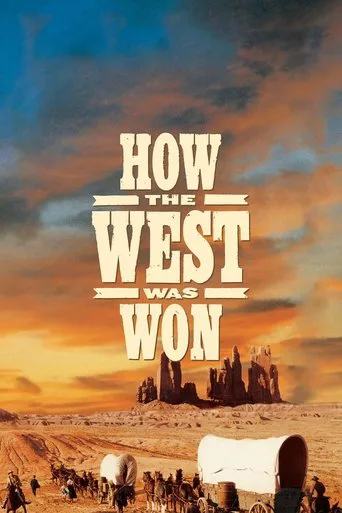
How the West Was Won
1962 164 min United States of America G 12+
★7.6
Western, Action
Director: John Ford, Henry Hathaway, George Marshall
Trailers
 EN
EN
 EN
EN
 EN
EN
Description
The epic tale of the development of the American West from the 1830s through the Civil War to the end of the century, as seen through the eyes of one pioneer family.
Budget:
$15M
US Gross:
$76,729
Worldwide:
$76,729
Starring
James Stewart
Actor
John Wayne
Actor
Gregory Peck
Actor
Awards
Academy Awards 1964
— Best Sound
Academy Awards 1964
— Best Film Editing
Academy Awards 1964
— Best Original Screenplay
Academy Awards 1964
— Best Original Screenplay
Academy Awards 1964
— Best Cinematography (Color)
Academy Awards 1964
— Best Picture
Academy Awards 1964
— Best Original Score
Academy Awards 1964
— Best Production Design (Color)
Key opinion
How the West Was Won is an ambitious, large-scale cinematic epic that successfully utilizes an all-star cast to document the historical expansion of the American frontier. While the film is celebrated for its breathtaking practical set pieces and grand scope, it is frequently criticized for favoring spectacle over character depth and for its somewhat artificial, idealized depiction of American history.
| Direction | The film features spectacular, high-stakes action sequences, including river rafting, buffalo stampedes, and train robberies, which remain the highlights of the production. | |
| Acting | The vast, all-star ensemble cast delivers talented performances that effectively anchor the episodic narrative. | |
| Cinematography | The sprawling, multi-generational epic relies on a grand, sweeping visual approach that successfully captures the scale of the American frontier. | |
| Screenplay | The episodic narrative structure is inherently disjointed, leading to a storytelling experience that feels more like a collection of vignettes than a cohesive emotional journey. | |
| Theme | The film's tone fluctuates between engaging personal drama and a sterile, overly moralizing 'museum-piece' portrayal of history. |