Trailers
Description
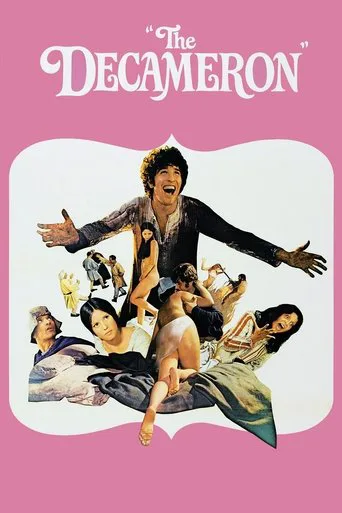
A young Sicilian is swindled twice, but ends up rich; a man poses as a deaf-mute in a convent of curious nuns; a woman must hide her lover when her husband comes home early; a scoundrel fools a priest on his deathbed; three brothers take revenge on their sister's lover; a young girl sleeps on the roof to meet her boyfriend at night; a group of painters wait for inspiration; a crafty priest attempts to seduce his friend's wife; and two friends make a pact to find out what happens after death.
Starring
Awards
Key opinion
Pasolini's adaptation of The Decameron is widely praised as an atmospheric and vibrant exploration of medieval Italian life that celebrates human vitality through a series of bawdy, satirical tales. While critics occasionally disagree on the efficacy of his theatrical stylistic choices, the film is generally lauded for its honest, non-judgmental portrayal of sin, love, and the physical reality of human existence.
| Acting | The use of raw, non-professional actors effectively creates an immersive and authentic atmosphere of medieval Italian life. | |
| Production | The film features a bright, earthy visual palette and period-accurate costume design that successfully captures the aesthetic of the Renaissance. | |
| Direction | Pasolini’s direction elevates the source material by balancing satirical commentary on religious hypocrisy with a joyous, unashamed celebration of human desire. | |
| Pacing | The episodic structure maintains engagement, though some viewers find the film’s pacing and shifting narrative focus to be uneven. | |
| Screenplay | The film’s theatrical, occasionally unnatural dialogue is seen by some as a profound artistic choice that adds literary depth, while others view it as an unnecessary stylistic abstraction. |