Trailers

 EN
EN
 EN
EN
 Teaser
 Teaser
 Teaser
 Teaser
 Teaser
 Teaser
 Teaser
 Teaser
 Teaser
 Teaser
 Teaser
 Teaser
 Teaser
 EN
EN
 EN
EN
 EN
EN
 EN
EN
 EN
EN
 EN
EN
 EN
EN
 EN
EN
 EN
EN
 EN
EN
 EN
EN
 EN
EN
 EN
EN
 EN
EN
 EN
EN
 EN
EN
 EN
EN
 EN
EN
 EN
EN
 EN
EN
 EN
EN
 EN
EN
Description
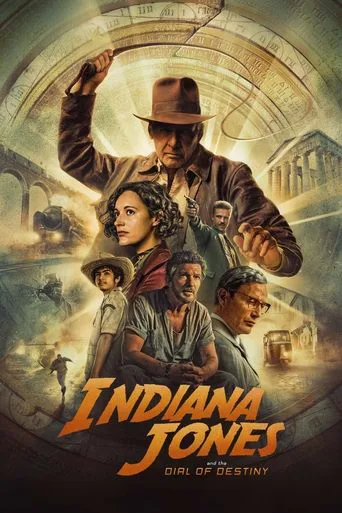
Finding himself in a new era, and approaching retirement, Indy wrestles with fitting into a world that seems to have outgrown him. But as the tentacles of an all-too-familiar evil return in the form of an old rival, Indy must don his hat and pick up his whip once more to make sure an ancient and powerful artifact doesn't fall into the wrong hands.
Starring
Awards
Key opinion
Indiana Jones and the Dial of Destiny is viewed as a functional, nostalgia-driven conclusion to the franchise that splits audiences between those who appreciate its emotional character arc and those who find it a stagnant, overlong repetition of past glories. While Harrison Ford's final performance receives widespread respect, the film's reliance on CGI and its sprawling, inconsistent screenplay remain significant points of contention.
| Acting | Harrison Ford delivers a grounded, emotionally resonant performance that successfully captures the character's aging process. | |
| Score | John Williams' iconic score provides a familiar, nostalgic anchor that enhances the film's emotional impact. | |
| Pacing | The film's excessive runtime leads to a lethargic midsection, leaving many viewers feeling the pacing is sluggish and poorly managed. | |
| Screenplay | Opinions on the screenplay are divided: some view it as a cohesive and satisfying conclusion to the series, while others dismiss it as a messy, derivative script filled with lackluster dialogue. | |
| Production | The reliance on digital effects is polarized; critics point to an over-dependence on CGI that creates a 'floaty' look, while supporters praise the technical execution of the action sequences. | |
| Ending | The ending remains a point of disagreement, with some viewers finding it a deftly handled and emotional send-off, while others find it forced or narratively disjointed. |