← Back to results
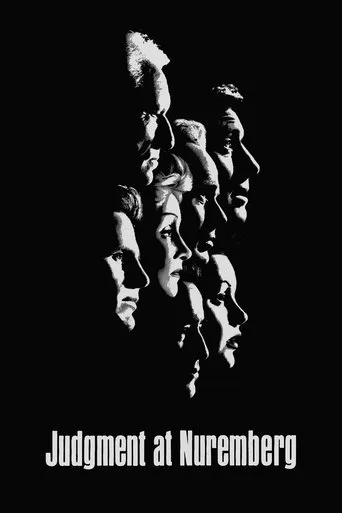
Judgment at Nuremberg
1961 191 min United States of America 12+
★8.6
Drama, History
Director: Stanley Kramer
🎭 Based on
«Judgment at Nuremberg»
Trailers
 EN
EN
 EN
EN
 EN
EN
 EN
EN
 EN
EN
Description
In 1947, four German judges who served on the bench during the Nazi regime face a military tribunal to answer charges of crimes against humanity. Chief Justice Haywood hears evidence and testimony not only from lead defendant Ernst Janning and his defense attorney Hans Rolfe, but also from the widow of a Nazi general, an idealistic U.S. Army captain and reluctant witness Irene Wallner.
Budget:
$3M
Worldwide:
$10M
Starring
Spencer Tracy
Actor
Burt Lancaster
Actor
Richard Widmark
Actor
Awards
Golden Globe 1962
— Best Actor (Drama)
Golden Globe 1962
— Best Director
Academy Awards 1962
— Best Adapted Screenplay
Academy Awards 1962
— Best Picture
Academy Awards 1962
— Best Film Editing
Golden Globe 1962
— Best Actor (Drama)
BAFTA 1962
— Best International Actor
Academy Awards 1962
— Best Supporting Actor
Golden Globe 1962
— Best Director
Academy Awards 1962
— Best Supporting Actress
BAFTA 1962
— Best Picture
Golden Globe 1962
— Best Picture (Drama)
Academy Awards 1962
— Best Actor
Golden Globe 1962
— Best Film Promoting World Understanding
Academy Awards 1962
— Best Adapted Screenplay
Academy Awards 1962
— Best Costume Design (Black and White)
Golden Globe 1962
— Best Supporting Actress
Academy Awards 1962
— Best Cinematography (Black and White)
Key opinion
Judgment at Nuremberg is widely regarded as a masterful, morally urgent courtroom drama that transcends standard genre tropes to confront complicity and the collapse of ethics. While its three-hour runtime is extensive, most viewers find the film's gripping performances and profound thematic inquiries into human responsibility to be consistently compelling.
| Acting | The ensemble cast delivers powerful, transformative performances, with Maximilian Schell’s defense attorney and Spencer Tracy’s nuanced judge anchoring the film’s moral weight. | |
| Direction | Stanley Kramer’s direction emphasizes moral urgency and psychological sharpness, successfully elevating the film beyond a traditional courtroom drama. | |
| Theme | The script provocatively explores the complicity of 'ordinary' citizens and officials, successfully framing the trials as a test of conscience rather than just legal procedure. | |
| Cinematography | The cinematography effectively evokes a grim, oppressive atmosphere that mirrors the moral decay and postwar anxiety of Germany. | |
| Runtime | While many viewers find the film’s three-hour runtime essential for building sustained, gripping tension, some may find the contemplative, dense pacing to be an exhausting test of endurance. |