← Back to results
Kramer vs. Kramer
1979 105 min United States of America PG 12+
★8.5
Drama
Director: Robert Benton
🎭 Based on
«Kramer vs. Kramer»
byAvery Corman
Trailers

 EN
EN
 Teaser
 EN
EN
 EN
EN
 EN
EN
 EN
EN
 EN
EN
 EN
EN
 EN
EN
 EN
EN
 EN
EN
 EN
EN
 EN
EN
 EN
EN
 EN
EN
 EN
EN
Description
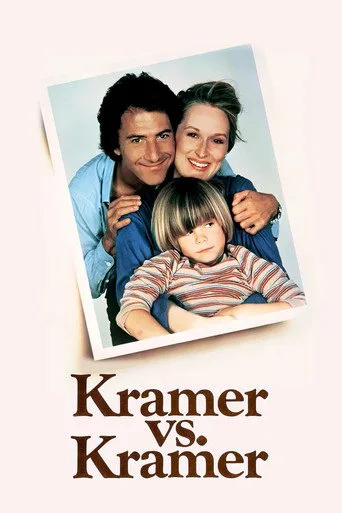
Ted Kramer is a career man for whom his work comes before his family. His wife Joanna cannot take this anymore, so she decides to leave him. Ted is now faced with the tasks of housekeeping and taking care of himself and their young son Billy.
Budget:
$8M
US Gross:
$106.26M
Worldwide:
$106.26M
Starring
Dustin Hoffman
Actor
Meryl Streep
Actor
Jane Alexander
Actor
Awards
Golden Globe 1980
— Best Actor (Drama)
Academy Awards 1980
— Best Picture
Golden Globe 1980
— Best Screenplay
Golden Globe 1980
— Best Supporting Actor
Golden Globe 1980
— Best Actor (Drama)
Academy Awards 1980
— Best Picture
BAFTA 1981
— Best Actor
BAFTA 1981
— Best Director
BAFTA 1981
— Best Screenplay
BAFTA 1981
— Best Film Editing
Golden Globe 1980
— Best Screenplay
BAFTA 1981
— Best Picture
Academy Awards 1980
— Best Director
Academy Awards 1980
— Best Adapted Screenplay
Academy Awards 1980
— Best Cinematography
Golden Globe 1980
— Best Supporting Actress
Golden Globe 1980
— Best Picture (Drama)
Golden Globe 1980
— Breakthrough of the Year
Academy Awards 1980
— Best Film Editing
Academy Awards 1980
— Best Supporting Actress
Academy Awards 1980
— Best Actor
Academy Awards 1980
— Best Supporting Actor
Key opinion
Kramer vs. Kramer is widely regarded as a profound and authentic examination of family dynamics, divorce, and the challenges of parenthood. While a few critics find the character motivations or conflicts underdeveloped, most viewers praise its emotional resonance and the transformation of its central figures.
| Acting | Dustin Hoffman, Meryl Streep, and Justin Henry anchor the film with naturalistic and emotionally raw performances. | |
| The film succeeds as a poignant, relevant exploration of the shift from career-obsessed ambition to the conscious prioritization of child-rearing. | ||
| Culture | The narrative effectively captures 1970s social shifts regarding gender roles and the pursuit of individual self-realization. | |
| Editing | The pacing and scene structure are praised for their tight, intentional editing that creates a sense of realistic development. | |
| Theme | The portrayal of the mother's abandonment and the parents' motivations divide viewers, with some finding it a deeply human dilemma and others seeing it as an act of inexcusable selfishness. | |
| Screenplay | The depth of the character writing is contested; some perceive a masterclass in psychological complexity, while others find the emotional conflicts superficial or narcissistic. |