← Back to results
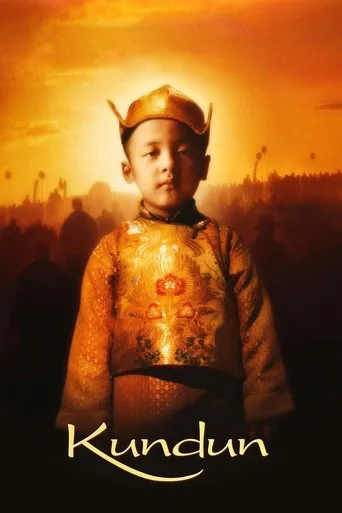
Kundun
1997 134 min United States of America PG-13 12+
★7.5
Drama, History
Director: Martin Scorsese
Trailers
Description
The Tibetans refer to the Dalai Lama as 'Kundun', which means 'The Presence'. He was forced to escape from his native home, Tibet, when communist China invaded and enforced an oppressive regime upon the peaceful nation. The Dalai Lama escaped to India in 1959 and has been living in exile in Dharamsala ever since.
Budget:
$28M
US Gross:
$5.68M
Worldwide:
$5.68M
Starring
Tenzin Thuthob Tsarong
Actor
Gyurme Tethong
Actor
Tulku Jamyang Kunga Tenzin
Actor
Awards
Academy Awards 1998
— Best Production Design
Academy Awards 1998
— Best Costume Design
Golden Globe 1998
— Best Original Score
Academy Awards 1998
— Best Cinematography
Academy Awards 1998
— Best Score for a Drama
Key opinion
Martin Scorsese’s Kundun is widely praised for its exceptional visual craft and atmospheric immersion into Tibetan culture. However, opinions diverge on its narrative substance, with some viewers finding it a profound, meditative exploration of spirituality and others criticizing it for being overly hollow or politically biased.
| Cinematography | Roger Deakins’ fluid and meditative cinematography serves as the film's most consistently lauded achievement. | |
| Production | Dante Ferretti’s meticulous production design and costumes successfully recreate Tibetan culture with immersive, authentic detail. | |
| Score | Philip Glass’s epic and mysterious score effectively enhances the film's meditative and spiritual atmosphere. | |
| Acting | The casting of non-professional actors is widely respected for providing a grounded, authentic feel to the portrait of the Dalai Lama. | |
| Screenplay | The narrative balance is divided; some find the film a poetic and contemplative experience, while others perceive it as narratively thin and lacking deep psychological insight into the protagonist. | |
| Theme | The film’s political stance is highly polarizing, with viewers split between seeing it as a poignant defense of Tibetan culture and viewing it as a biased, propagandistic simplification of complex historical events. |