Trailers
 EN
EN
 EN
EN
 EN
EN
Description
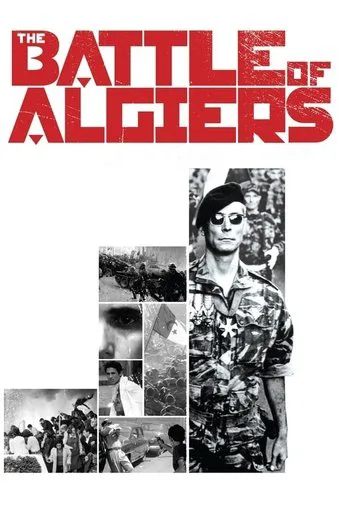
Paratrooper commander Colonel Mathieu, a former French Resistance fighter during World War II, is sent to Algeria to reinforce efforts to squelch the uprisings of the Algerian War. There he faces Ali la Pointe, a former petty criminal who, as the leader of the Algerian Front de Liberation Nationale, directs terror strategies against the colonial French government occupation. As each side resorts to ever-increasing brutality, no violent act is too unthinkable.
Starring
Awards
Key opinion
Gillo Pontecorvo's The Battle of Algiers is widely hailed as a masterpiece of neorealist cinema that uses a documentary-style approach to depict the Algerian War of Independence. While praised for its unflinching portrayal of brutality on both sides and its lasting historical and political relevance, some critics find its stylistic choices polarizing or its structural approach emotionally detached.
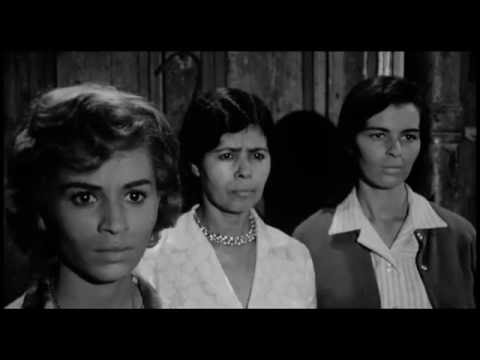
| Cinematography | The film employs a distinct Italian neorealist aesthetic, using non-professional actors and grainy cinematography to achieve a haunting, documentary-like authenticity. | |
| Score | Ennio Morricone’s score effectively heightens the tension, utilizing heavy marches and rhythmic percussion to underscore the film’s atmosphere of pervasive horror and dread. | |
| Screenplay | The narrative avoids traditional hero-centric storytelling, instead presenting the collective Algerian uprising and the French military response as a complex, two-sided cycle of violence. | |
| Emotion | The film's rigid, objective chronicle style leaves some viewers feeling alienated by a perceived lack of personal character depth or emotional intimacy. | |
| Theme | Opinions on the film's neutrality are divided: some view it as a balanced, impartial historical study, while others perceive a subtle, underlying bias toward the Algerian revolutionaries. | |
| Direction | The pseudo-documentary aesthetic is appreciated by many for its historical weight, but others criticize it as outdated, clumsy, or overly jingoistic in its presentation. |