Trailers

 EN
EN
 EN
EN
Description
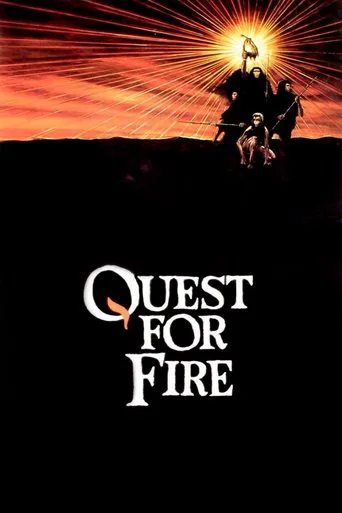
In the prehistoric world, a Cro-Magnon tribe depends on an ever-burning source of fire, which eventually extinguishes. Lacking the knowledge to start a new fire, the tribe sends three warriors on a quest for more. With the tribe's future at stake, the warriors make their way across a treacherous landscape full of hostile tribes and monstrous beasts. On their journey, they encounter Ika, a woman who has the knowledge they seek.
Starring
Awards
Key opinion
Quest for Fire is widely celebrated as a bold, immersive, and technically innovative achievement that successfully depicts prehistoric life without relying on traditional dialogue or Hollywood tropes. While some viewers find its slow pace and lack of conventional narrative structure challenging, most consider its commitment to atmospheric realism and practical effects to be a landmark in cinema.
| Production | The film's commitment to practical effects, including award-winning makeup and costume design, creates an authentic and immersive prehistoric atmosphere that remains impressive even in the CGI era. | |
| Screenplay | The innovative use of invented, non-verbal languages and gesture-based communication successfully creates a credible, dialogue-free narrative that transcends language barriers. | |
| Acting | The performances by Ron Perlman, Everett McGill, and Rae Dawn Chong are convincing and physically transformative, effectively grounding the characters in a primal, animalistic reality. | |
| Pacing | The film’s slow, contemplative pace and documentary-like approach to survival rewards patient viewers, though it leaves others feeling that the narrative lacks necessary dynamism. | |
| Humor | The integration of comedic, often grotesque elements into a grim, survivalist story creates a jarring tone that some find distracting while others appreciate as a unique character study. | |
| Adaptation | Opinions on the film's adaptation of Rosny's novel are split; some applaud the thematic focus on humanity's evolutionary journey, while others criticize the omission of the book’s specific philosophical depth. |