← Back to results
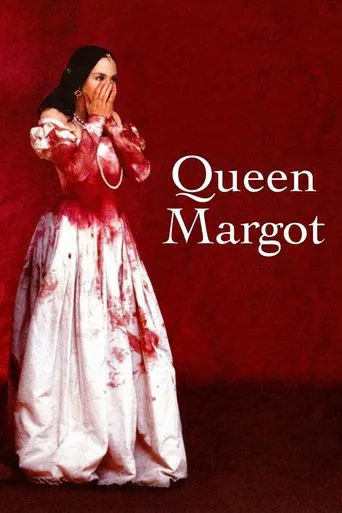
Queen Margot
La Reine Margot
1994 138 min France, Germany, Italy R 18+
★7.9
Drama, History, Romance
Director: Patrice Chéreau
🎭 Based on
«La Reine Margot»
byAlexandre Dumas
Trailers
Description
Paris, Kingdom of France, August 18, 1572. To avoid the outbreak of a religious war, the Catholic princess Marguerite de Valois, sister of the feeble King Charles IX, marries the Huguenot King Henry III of Navarre.
US Gross:
$1.3M
Worldwide:
$1.32M
Starring
Isabelle Adjani
Actor
Daniel Auteuil
Actor
Jean-Hugues Anglade
Actor
Awards
Cannes Film Festival 1994
— Silver Award – Best Actress
César Awards 1995
— Best Costume Design
César Awards 1995
— Best Cinematography
César Awards 1995
— Best Cinematography
César Awards 1995
— Best Screenplay
César Awards 1995
— Best Director
Academy Awards 1995
— Best Costume Design
Golden Globe 1995
— Best International Feature Film
Cannes Film Festival 1994
— Palme d'Or
César Awards 1995
— Best Actress
César Awards 1995
— Best Film Editing
César Awards 1995
— Best Production Design
César Awards 1995
— Best Supporting Actor
César Awards 1995
— Best Original Score
Cannes Film Festival 1994
— Jury Prize
BAFTA 1996
— Best International Feature Film
César Awards 1995
— Best Picture
Key opinion
Patrice Chéreau’s La Reine Margot is a polarizing, visceral reinterpretation of Alexandre Dumas’ novel that trades traditional romanticized period aesthetics for gritty, often grotesque naturalism. While many praise its daring artistic vision and commanding performances, critics of the film point to its disregard for historical fact and its abrasive, intentionally shocking stylistic choices.
| Acting | Isabelle Adjani, Virna Lisi, and Daniel Auteuil anchor the film with powerful, nuanced performances that effectively ground the visceral intensity of their characters. | |
| Direction | Patrice Chéreau’s bold, theatrical direction successfully moves away from costume drama clichés, favoring a stylized, provocative approach to historical storytelling. | |
| Production | The production design creates an immersive atmosphere by prioritizing a 'dirty' aesthetic—showcasing filth, disease, and decay—to replace sanitized Hollywood depictions of the Renaissance. | |
| Adaptation | Opinions on historical fidelity are sharply divided; supporters value its rejection of sterile costume-drama tropes, while detractors criticize its specific anachronisms and loose adaptation of the source material. | |
| Emotion | The film's reliance on graphic violence, visceral realism, and grotesque imagery divides viewers between those who find it captivating and artistically profound, and those who perceive it as needlessly abrasive or shallow. |