← Back to results
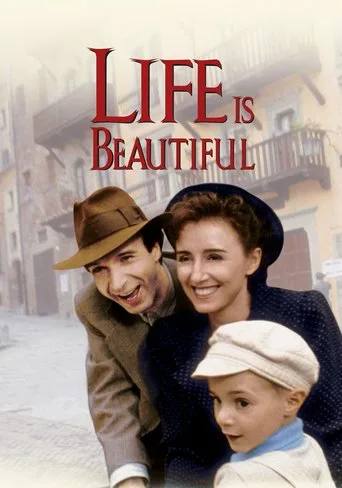
Life Is Beautiful
La vita è bella
1997 116 min Italy PG-13 16+
★8.7
Comedy, Drama
Director: Roberto Benigni
Trailers

Description
A touching story of an Italian book seller of Jewish ancestry who lives in his own little fairy tale. His creative and happy life would come to an abrupt halt when his entire family is deported to a concentration camp during World War II. While locked up he tries to convince his son that the whole thing is just a game.
Budget:
$20M
US Gross:
$57.56M
Worldwide:
$230.1M
Starring
Roberto Benigni
Actor
Nicoletta Braschi
Actor
Giorgio Cantarini
Actor
Awards
Cannes Film Festival 1998
— Grand Jury Prize
Academy Awards 1999
— Best Score for a Drama
Screen Actors Guild Awards 1999
— Best Actor
Screen Actors Guild Awards 1999
— Best Actor
European Film Awards 1998
— Best Picture
Academy Awards 1999
— Best Screenplay
César Awards 1999
— Best International Feature Film
Academy Awards 1999
— Best Actor
Goya Awards 2000
— Best European Film
Academy Awards 1999
— Best Picture
BAFTA 1999
— Best Actor
European Film Awards 1998
— Best Actor
Academy Awards 1999
— Best International Feature Film
Academy Awards 1999
— Best Director
Cannes Film Festival 1998
— Palme d'Or
BAFTA 1999
— Best International Feature Film
BAFTA 1999
— Best Original Screenplay
Screen Actors Guild Awards 1999
— Best Cast Ensemble
Key opinion
Life Is Beautiful is widely celebrated as a masterful, heart-wrenching blend of comedic whimsy and tragic drama that uniquely portrays the Holocaust through a lens of parental love and hope. While some viewers feel the film is best experienced once to preserve its emotional purity, it remains a globally acclaimed classic lauded for its profound optimism in the face of horror.
| Acting | Roberto Benigni delivers an Oscar-winning, career-defining performance that seamlessly transitions from buoyant comedy to desperate, protective fatherhood. | |
| Score | Nicola Piovani’s score is perfectly integrated into the narrative, reinforcing both the whimsical tone of the first act and the poignant sorrow of the second. | |
| Screenplay | The narrative structure daringly pivots from a lighthearted fairy-tale romance to a grim concentration camp drama, successfully maintaining a cohesive vision throughout. | |
| Emotion | The film's emotional impact is immense, successfully tempering the horrors of the Holocaust with an infectious, life-affirming spirit. | |
| Ending | While most find the film's shift in tone and blend of genres to be its greatest strength, some critics argue the final sequence feels rushed or that the film's high emotional stakes make repeat viewings difficult. |