Trailers
 EN
EN
 EN
EN
 Teaser
Description
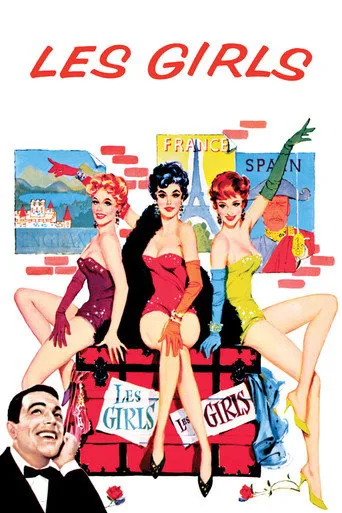
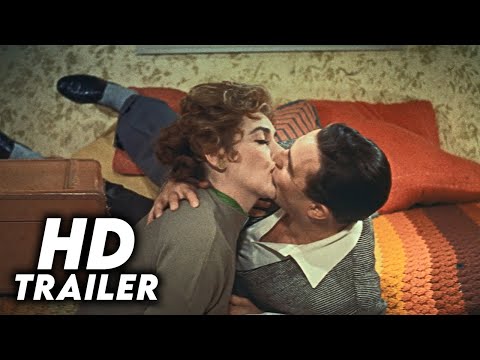
After writing a tell-all book about her days in the dance troupe "Barry Nichols and Les Girls", Sybil Wren is sued for libeling her fellow dancer Angele. A Rashômon style narrative presents the story from three points of view where Sybil accuses Angele of having an affair with Barry, while Angele insists that it was actually Sybil who was having the affair. Finally, Barry gives his side of the story.
Starring
Awards
Key opinion
Les Girls is widely regarded as a light, visually polished piece of 1950s musical entertainment that balances colorful cabaret performances with a unique, albeit inconsistent, narrative structure. While the film excels as a charming, undemanding pastime, its reliance on shifting perspectives and dated musical arrangements prevents it from achieving lasting dramatic depth.
| Direction | The musical numbers, particularly the rope dance and the pilot’s cafe sequence, are expertly staged and showcase the high level of talent among the leads. | |
| Acting | The cast delivers strong, charismatic performances, with Kay Kendall’s award-winning turn serving as a standout highlight. | |
| Production | The film’s visual presentation is bolstered by high-quality production design that earned industry recognition at the time of its release. | |
| Screenplay | The Rashomon-style narrative structure is ambitious in its attempt to offer multiple perspectives, but it ultimately creates inconsistencies that render the plot feel incoherent and implausible. | |
| Score | The musical score is a subject of disagreement: some find it a fittingly light accompaniment, while others argue the compositions feel outdated compared to the choreography. |