Trailers
 EN
EN
 EN
EN
 EN
EN
 EN
EN
 EN
EN
 EN
EN
 EN
EN
Description
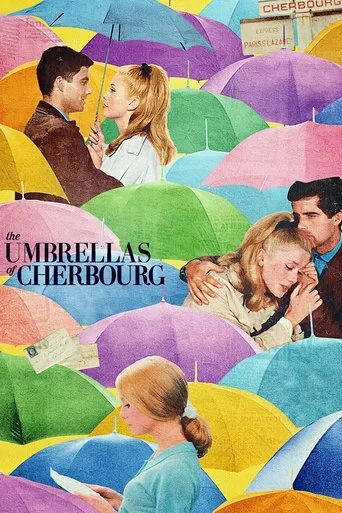
This simple romantic tragedy begins in 1957. Guy Foucher, a 20-year-old French auto mechanic, has fallen in love with 17-year-old Geneviève Emery, an employee in her widowed mother's chic but financially embattled umbrella shop. On the evening before Guy is to leave for a two-year tour of combat in Algeria, he and Geneviève make love. She becomes pregnant and must choose between waiting for Guy's return or accepting an offer of marriage from a wealthy diamond merchant.
Starring
Awards
Key opinion
Les Parapluies de Cherbourg is widely celebrated as a quintessential, visually stunning musical masterpiece that redefined the genre through its innovative use of sung-through dialogue. While most critics and audiences are moved by its melancholic exploration of first love and the harsh realities of life, a minority of viewers find the narrative thin, the characters frustratingly passive, or the sentimentality excessive.
| Score | Michel Legrand’s operatic score is a definitive achievement that perfectly mirrors the emotional states of the characters and elevates the narrative. | |
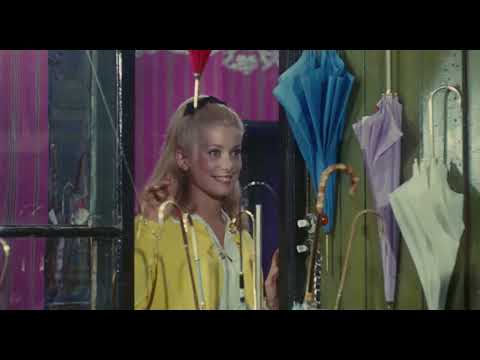
| Production | The vivid, stylized use of color in costumes and set design creates a dreamlike, dollhouse-inspired aesthetic that defines the film's visual identity. | |
| Acting | Catherine Deneuve delivers a star-making performance, anchoring the film with an elegance and beauty that effectively communicates the protagonist's emotional journey. | |
| Originality | The decision to have characters sing every line of dialogue—rather than traditional speech—creates a unique, immersive experience that transcends standard musical conventions. | |
| Screenplay | Reactions to the narrative are divided: supporters see a poignant, realistic meditation on how time and circumstance erode youthful promises, while detractors view the story as banal, tedious, or morally questionable. | |
| Emotion | Perspectives on the emotional impact are split between those who find the film’s tragic, melancholic tone deeply moving and those who perceive the characters’ behavior and the plot as overly sentimental or lacking in substance. |