Trailers
 EN
EN
 EN
EN
Description
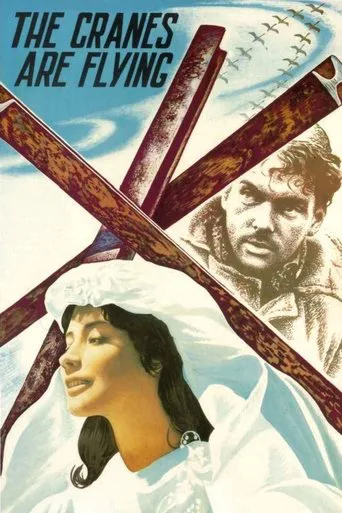
Veronika and Boris come together in Moscow shortly before World War II. Walking along the river, they watch cranes fly overhead, and promise to rendezvous before Boris leaves to fight. Boris misses the meeting and is off to the front lines, while Veronika waits patiently, sending letters faithfully. After her house is bombed, Veronika moves in with Boris' family, into the company of a cousin with his own intentions.
Starring
Awards
Key opinion
Mikhail Kalatozov’s The Cranes Are Flying is widely hailed as a cinematic masterpiece that prioritizes intimate psychological drama over traditional combat spectacle. While it is celebrated for its technical innovation and emotional sincerity, the film's complex portrayal of its protagonist's moral choices remains a subject of intense debate.
| Cinematography | Sergey Urusevsky’s innovative cinematography, characterized by sweeping camera movements and striking close-ups, creates an immersive, emotionally resonant visual language. | |
| Acting | Tatyana Samoylova delivers an iconic, raw, and intensely expressive performance that anchors the film’s exploration of isolation and grief. | |
| Theme | The film’s focus on the civilian, psychological experience of war provides a powerful and unique humanistic perspective that diverges from conventional heroic war narratives. | |
| Screenplay | The script is praised by many for its sincerity and emotional purity, though some critics argue that the narrative trajectory of the heroine lacks clear logic or moral justification. | |
| Originality | The protagonist's decision to marry a draft-evading relative in Boris's absence triggers a sharp divide, with some viewers viewing her as a deeply flawed traitor and others as a tragic, resilient survivor of impossible circumstances. |