← Back to results
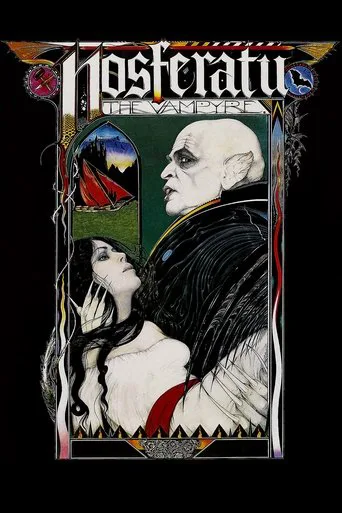
Nosferatu the Vampyre
Nosferatu - Phantom der Nacht
1979 107 min Germany, France PG 18+
★7.7
Drama, Horror
Director: Werner Herzog
🎭 Based on
«Dracula»
byBram Stoker
Trailers
 EN
EN
 EN
EN
 EN
EN
 EN
EN
 EN
EN
 EN
EN
 EN
EN
 EN
EN
Description
A real estate agent leaves behind his beautiful wife to go to Transylvania to visit the mysterious Count Dracula and formalize the purchase of a property in Wismar.
Budget:
$1.4M
Worldwide:
$3,451
Starring
Klaus Kinski
Actor
Isabelle Adjani
Actor
Bruno Ganz
Actor
Awards
Berlin International Film Festival 1979
— Silver Bear – Outstanding Achievement
Saturn Awards 1980
— Best Costume Design
Berlin International Film Festival 1979
— Golden Bear
Saturn Awards 1980
— Best International Feature Film
Key opinion
Werner Herzog's remake of the 1922 classic is widely regarded as a visually haunting and atmospheric achievement that elevates the vampire from a mere monster to a tragic, existential figure. While most critics praise its stylistic ambition and Klaus Kinski's iconic performance, a minority of viewers find the pacing pretentious and the deliberate attempt to replicate silent-era acting sensibilities off-putting.
| Acting | Klaus Kinski delivers a mesmerizing, unforgettable performance that portrays the vampire as a pitiable, weary, and lonely creature rather than a traditional villain. | |
| Cinematography | The film succeeds in creating a deeply oppressive and dread-filled atmosphere through its masterful use of stark landscapes, fog-drenched visuals, and a haunting musical score. | |
| Adaptation | The film functions as a faithful, reverent homage to Murnau's 1922 original, meticulously recreating its iconic visuals and composition while successfully updating them for a new era. | |
| Pacing | The film's deliberate, slow-burn pacing and commitment to a somber, silent-film aesthetic are seen by some as a profound artistic choice, while others dismiss the style as pretentious, hollow, and sluggish. | |
| Ending | The narrative additions, particularly the film's concluding scenes, divide audiences who either appreciate the thematic closure or view the changes as unnecessary and awkward departures from the original's legacy. |