← Back to results
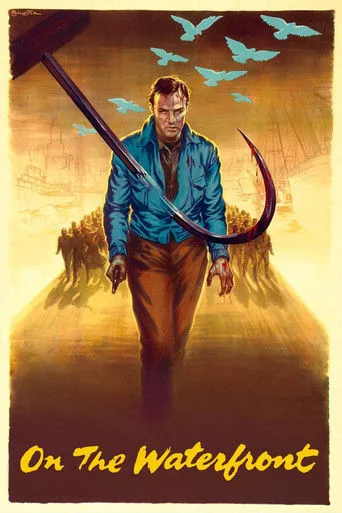
On the Waterfront
1954 108 min United States of America 16+
★8.8
Crime, Drama, Romance
Director: Elia Kazan
🎭 Based on
«news article»
Trailers
 EN
EN
 EN
EN
 EN
EN
 EN
EN
 EN
EN
 EN
EN
 EN
EN
 EN
EN
Description
A prizefighter-turned-longshoreman with a conscience goes up against labor leaders to expose corruption, extortion, and murder among the union ranks.
Budget:
$910,000
Worldwide:
$9.6M
Starring
Marlon Brando
Actor
Karl Malden
Actor
Lee J. Cobb
Actor
Awards
Academy Awards 1955
— Best Cinematography (Black and White)
Golden Globe 1955
— Best Picture (Drama)
Venice Film Festival 1954
— Silver Lion
Venice Film Festival 1954
— Silver Lion
Academy Awards 1955
— Best Actor
Academy Awards 1955
— Best Picture
Academy Awards 1955
— Best Film Editing
Academy Awards 1955
— Best Director
Venice Film Festival 1954
— Italian Critics Award
BAFTA 1955
— Best Picture
Golden Globe 1955
— Best Director
Golden Globe 1955
— Best Cinematography (Black and White)
Academy Awards 1955
— Best Supporting Actress
Academy Awards 1955
— Best Screenplay
Academy Awards 1955
— Best Production Design (Black and White)
Academy Awards 1955
— Best Supporting Actor
Academy Awards 1955
— Best Score for a Drama or Comedy
Golden Globe 1955
— Best Actor (Drama)
Venice Film Festival 1955
— OCIC Award
Venice Film Festival 1954
— Golden Lion
BAFTA 1955
— Best International Actor
Key opinion
On the Waterfront is widely regarded as a seminal classic of American cinema, praised for its powerful performances and atmospheric depiction of union corruption. While it is celebrated for its historical significance and psychological depth, some viewers find its moral framing and certain character archetypes to be either contrived or politically polarizing.
| Acting | Marlon Brando's performance is widely praised for its naturalism and emotional complexity, anchoring the film as a definitive breakthrough role. | |
| Cinematography | Boris Kaufman’s cinematography effectively utilizes dark, claustrophobic imagery and stark lighting to mirror the protagonist's internal moral struggle. | |
| Screenplay | The script is lauded for its lyrical, hard-hitting dialogue, particularly in the iconic scenes between Terry and his brother Charley. | |
| Direction | Elia Kazan’s direction creates a relentless sense of tension and a compelling atmosphere that sustains the narrative throughout. | |
| Theme | Opinions on the film's moral and ideological stance are divided; while some see it as a powerful story of individual conscience, others view it as manipulative propaganda or a self-serving justification for Kazan’s cooperation with the HUAC. | |
| Screenplay | Reception of the supporting characters is mixed, with some critics praising Father Barry’s influence, while others find his moralizing dialogue and the priest-centered resolution to be wooden and artificial. |