Trailers
Description
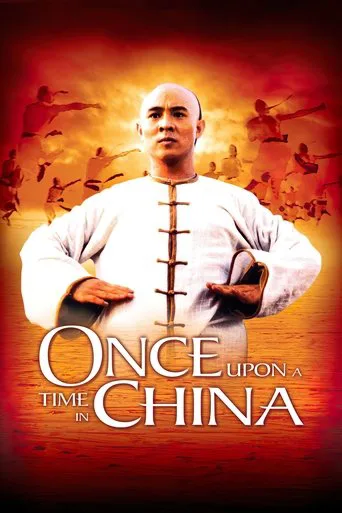
In late 19th-century Canton, legendary hero Wong Fei-Hung battles foreign forces' (English, French and American) plundering of China. When Aunt Yee returns from America totally westernised, Wong assumes the role of protector. This proves difficult when his martial arts school and local militia become involved in fierce battles with foreign and local governments. As violence escalates, even Aunt Yee has to question her new western ideals, but is it possible to fight guns with Kung Fu?
Starring
Awards
Key opinion
Tsui Hark’s Once Upon a Time in China is widely recognized as a foundational masterpiece that redefined Hong Kong action cinema through a distinct visual aesthetic and Jet Li’s iconic performance. While critics acknowledge its cultural significance and breathtaking martial arts choreography, some viewers find the narrative structure fractured and the plot resolutions occasionally disjointed.
| Acting | Jet Li delivers a definitive performance as Wong Fei-hung, successfully establishing himself as a formidable martial arts icon. | |
| Cinematography | The film utilizes an innovative visual vocabulary, including distinctive camera angles and slow-motion techniques, that permanently influenced the Hong Kong action genre. | |
| Originality | The martial arts choreography is physically impressive and features breathtaking set-piece battles, such as the climactic stair fight. | |
| Theme | The film effectively uses the legend of Wong Fei-hung to explore profound themes regarding the cultural clash between Eastern tradition and Western influence. | |
| Screenplay | Opinions on the screenplay are divided, with some viewers praising its dense, multi-layered sub-plots, while others find the narrative resolution to be disjointed and lacking coherence. |