Trailers

 EN
EN
 EN
EN
 EN
EN
Description
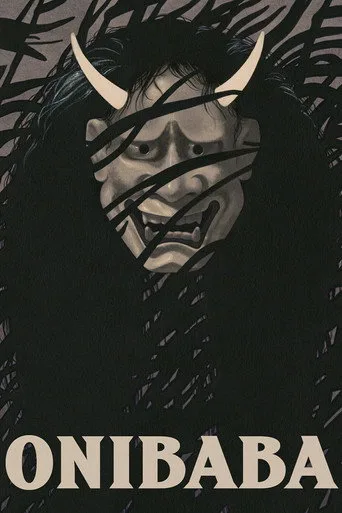
While her son, Kichi, is away at war, a woman and her daughter-in-law survive by killing samurai who stray into their swamp, then selling whatever valuables they find. Both are devastated when they learn that Kichi has died, but his wife soon begins an affair with a neighbor who survived the war, Hachi. The mother disapproves and, when she can't steal Hachi for herself, tries to scare her daughter-in-law with a mysterious mask from a dead samurai.
Starring
Awards
Key opinion
Kaneto Shindo’s Onibaba is widely celebrated as a masterful, atmospheric piece of Japanese cinema that uses a minimalist setting to explore primal human survival and moral decay. While most critics praise its visual intensity and psychological depth, a minority finds the pacing slow or the thematic simplicity off-putting.
| Cinematography | The cinematography masterfully utilizes the swaying reed marshes and high-contrast black-and-white compositions to create a suffocating, claustrophobic atmosphere. | |
| Acting | The performances, particularly by Nobuko Otowa, ground the film’s high-concept horror in raw, believable human desperation. | |
| Score | The score and sound design are highly effective at evoking a sense of ancient, relentless tension that heightens the film's unease. | |
| Pacing | The film’s pacing is viewed by many as a deliberate, tense build-up, though some viewers find the early acts overly slow and monotonous until the final climax. | |
| Screenplay | Opinions on the screenplay vary; many see it as a profound, multifaceted psychological drama, while others criticize the moral allegories as simplistic or unoriginal. |