← Back to results
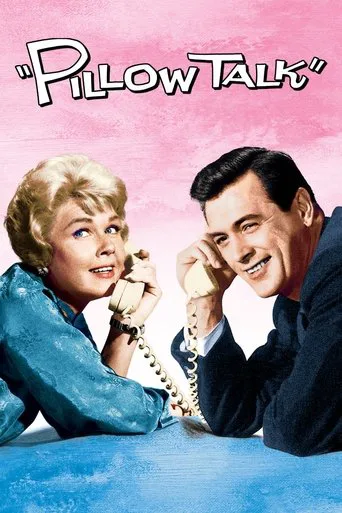
Pillow Talk
1959 102 min United States of America 0+
★8.1
Comedy, Romance
Director: Michael Gordon
Trailers
Description
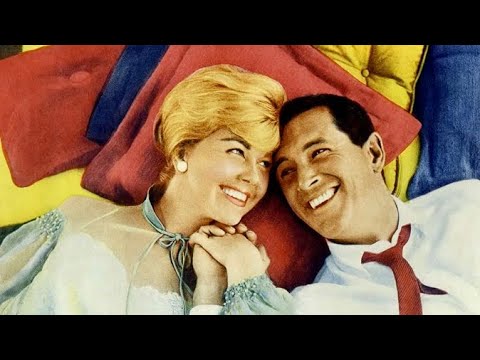
Playboy songwriter Brad Allen's succession of romances annoys his neighbor, interior designer Jan Morrow, who shares a telephone party line with him and hears all his breezy routines. After Jan unsuccessfully lodges a complaint against him, Brad sets about to seduce her in the guise of a sincere and upstanding Texas rancher. When mutual friend Jonathan discovers that his best friend is moving in on the girl he desires, however, sparks fly.
Budget:
$1.6M
US Gross:
$18.75M
Worldwide:
$18.75M
Starring
Rock Hudson
Actor
Doris Day
Actor
Tony Randall
Actor
Awards
Academy Awards 1960
— Best Original Screenplay
Golden Globe 1960
— Best Actress (Comedy or Musical)
Golden Globe 1960
— Best Picture (Comedy)
Academy Awards 1960
— Best Supporting Actress
Academy Awards 1960
— Best Production Design (Color)
Academy Awards 1960
— Best Score for a Drama or Comedy
Golden Globe 1960
— Best Supporting Actor
Academy Awards 1960
— Best Original Screenplay
Key opinion
Pillow Talk is widely regarded as a quintessential romantic comedy that defined the genre's formula for decades. While some critics find the plot predictable and artificial, the majority praise the charismatic chemistry between Doris Day and Rock Hudson and the strong performances of the supporting cast.
| Acting | Thelma Ritter's performance as the sharp-tongued Alma is a standout highlight that anchors the comedic elements. | |
| Acting | The chemistry between leads Doris Day and Rock Hudson is undeniable and serves as the primary engine for the film's enduring charm. | |
| Direction | The innovative use of split-screen techniques provides a visual flair that successfully elevates the film's comedic timing. | |
| Screenplay | The screenplay is praised for its sharp, witty banter, yet some viewers find the overarching romantic plot to be formulaic and entirely predictable. | |
| Production | The film's aesthetic, characterized by vibrant Technicolor and stylized production design, is viewed by some as iconic 1950s escapism, while others dismiss it as artificial and overly staged. |