← Back to results
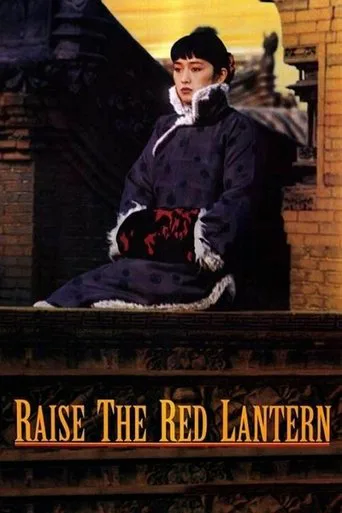
Raise the Red Lantern
大红灯笼高高挂
1991 125 min China, Hong Kong, Taiwan PG 12+
★8.5
Drama
Director: Yimou Zhang
🎭 Based on
«Raise the Red Lantern»
bySu Tong
Trailers
Description
In 1920s China, 19-year-old Songlian becomes a concubine of a powerful lord and is forced to compete with his three wives for the privileges gained.
Budget:
$1M
US Gross:
$2.6M
Worldwide:
$16.6M
Starring
Gong Li
Actor
Jingwu Ma
Actor
Saifei He
Actor
Awards
Venice Film Festival 1991
— Silver Lion
BAFTA 1993
— Best International Feature Film
Venice Film Festival 1991
— Golden Lion
Academy Awards 1992
— Best International Feature Film
Key opinion
Raise the Red Lantern is widely regarded as a visual and thematic masterpiece that uses the metaphor of a secluded, patriarchal household to critique systemic oppression and the corruption of human nature. While some viewers find its meditative pacing and cultural distance challenging, the consensus praises its brilliant cinematography and Gong Li's commanding performance.
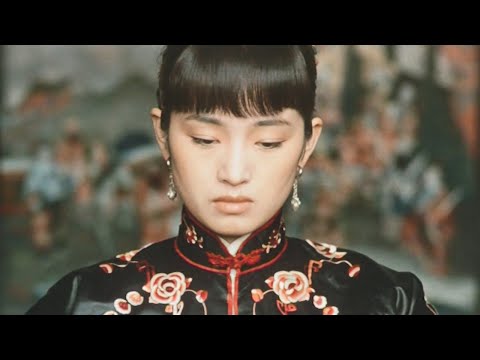
| Cinematography | The film's visual language—characterized by geometric compositions, vibrant color palettes, and painterly framing—masterfully heightens the oppressive, claustrophobic atmosphere. | |
| Acting | Gong Li delivers a powerful, nuanced performance that effectively anchors the film’s exploration of vulnerability, ambition, and eventual psychological collapse. | |
| Production | The production design exquisitely recreates the 1920s setting, utilizing the house as a central, symbolic character that mirrors the rigid hierarchy of traditional society. | |
| Screenplay | The screenplay functions as a profound, metaphorical critique of feudal patriarchy, exposing how societal rules turn individuals against one another. | |
| Pacing | The film's meditative, slow-burning tempo is viewed by some as an essential element of its atmospheric weight, while others find it distant or exhausting compared to Western cinematic norms. | |
| Theme | While many appreciate the film's ethnographic and historical depth, some argue that the narrative can feel overly allegorical at the expense of deeper individual character development. |