Trailers
Description
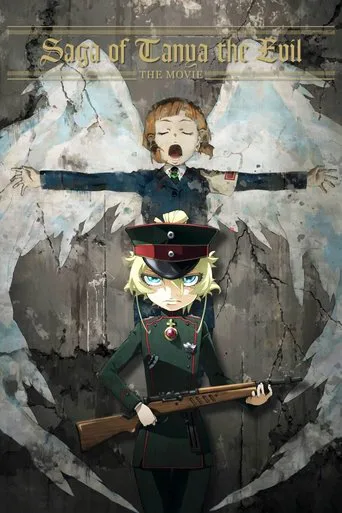
The time is UC 1926. The Imperial Army's 203rd Air Mage Battalion led by Major Tanya Degurechaff has won the battle to the south against the Republic's stragglers. They expected to be given a vacation after returning victorious, but instead receive special orders from Staff HQ as soon as they get home. They are told that there were signs of a large-scale deployment near the Empire-Federation border. Faced with the prospect of a new major enemy, the desperate Empire fans the flame of war. Meanwhile, an international volunteer army spearheaded by the Commonwealth set foot in Federation territory. As they say, the enemy of an enemy is your friend. They suffer through misfortune purely out of national interest, and among them is a young girl. She is Warrant Officer Mary Sue, and she takes up arms hoping to bring the Empire, who killed her father, to justice.
Starring
Awards
Key opinion
The Saga of Tanya the Evil movie is a polarizing work that functions as a direct continuation of the series' established aesthetic and narrative style. Critics are deeply divided, with many praising its unique protagonist and conceptual premise, while others condemn its ideological framing and use of historical parallels as blunt, problematic propaganda.
| Acting | The protagonist, Tanya, is widely recognized as a complex, multidimensional lead who subverts traditional war-hero tropes through her cynical, careerist worldview. | |
| Production | The film maintains a high level of visual and technical consistency with the original series, featuring high-quality animation and sound design. | |
| Originality | The world-building presents a logically coherent, if stylized, alternate-history map that effectively serves the premise of the ongoing conflict. | |
| Theme | Opinions on the narrative's ideological core are sharply divided: supporters see a satirical, nuanced exploration of war, while detractors view it as shallow, harmful, and overtly pro-fascist propaganda. | |
| Acting | Critics disagree on the quality of the supporting cast: some find the internal circle competent, while others dismiss the antagonists as flat, one-dimensional 'cardboard' characters. | |
| Culture | The portrayal of the Soviet-analogue faction is highly contentious, viewed by some as an interesting historical inversion and by others as an offensive use of regressive clichés. |