← Back to results
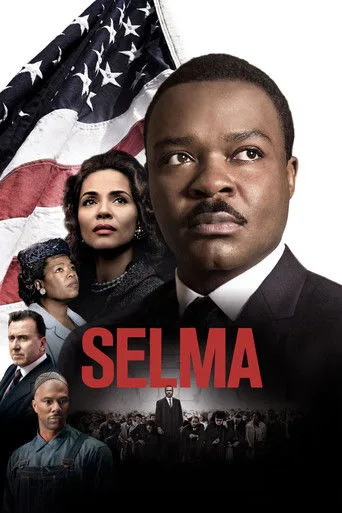
Selma
2014 128 min United Kingdom, United States of America PG-13 12+
★8.2
History, Drama
Director: Ava DuVernay
Trailers
 EN
EN
 EN
EN
Description
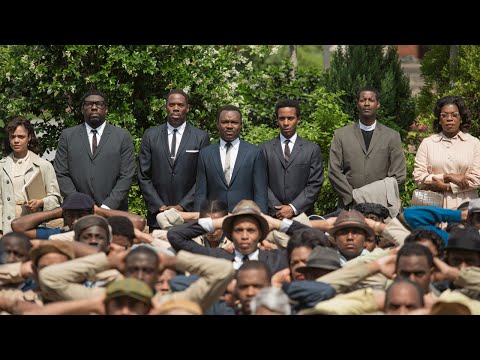
"Selma," as in Alabama, the place where segregation in the South was at its worst, leading to a march that ended in violence, forcing a famous statement by President Lyndon B. Johnson that ultimately led to the signing of the Voting Rights Act.
Budget:
$20M
US Gross:
$52.08M
Worldwide:
$66.79M
Starring
David Oyelowo
Actor
Carmen Ejogo
Actor
Oprah Winfrey
Actor
Awards
Academy Awards 2015
— Best Original Song
Golden Globe 2015
— Best Original Song
Academy Awards 2015
— Best Picture
Golden Globe 2015
— Best Picture (Drama)
Golden Globe 2015
— Best Actor (Drama)
Golden Globe 2015
— Best Director
MTV Movie & TV Awards 2015
— Best Picture
MTV Movie & TV Awards 2015
— Breakthrough of the Year
Key opinion
Selma is widely regarded as a powerful and emotionally resonant dramatization of the 1965 voting rights marches. While the film is praised for its immersive atmosphere and strong performances, some viewers diverge on the degree of its historical accuracy and its effectiveness in avoiding the tropes of standard Oscar-bait cinema.
| Acting | David Oyelowo provides an exceptional and convincing embodiment of Martin Luther King Jr. that anchors the film. | |
| Production | The production design and color palette successfully immerse the viewer in the authentic, harsh atmosphere of 1960s Alabama. | |
| Screenplay | The film avoids being a traditional cradle-to-grave biopic, choosing instead to focus effectively on the specific strategy and collective action of the Selma-to-Montgomery marches. | |
| Pacing | While some find the deliberate pacing symbolic and thoughtful, others view the film’s tempo as slow or exhausting. | |
| Adaptation | Opinions on historical fidelity are split, with some praising its realistic portrayal of systemic injustice, while others criticize the omission of key events or the speculative nature of certain dialogues. | |
| Originality | Some viewers perceive the film as a poignant and necessary examination of racial history, while critics argue it occasionally falls into the trap of repetitive, formulaic 'Oscar-bait' spectacles. |