Trailers
 EN
EN
 EN
EN
Description
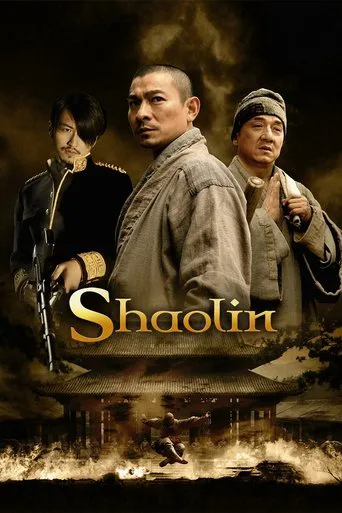
China is plunged into strife as feuding warlords try to expand their power by warring over neighboring lands. Fuelled by his success on the battlefield, young and arrogant Hao Jie sneers at Shaolin's masters when he beats one of them in a duel. But the pride comes before a fall. When his own family is wiped out by a rival warlord, Hao is forced to take refuge with the monks. As the civil unrest spreads and the people suffer, Hao and the Shaolin masters are forced to take a fiery stand against the evil warlords. They launch a daring plan or rescue and escape.
Starring
Awards
Key opinion
The film is a divisive exploration of redemption and war that blends philosophical ambition with traditional martial arts cinema. While some viewers appreciate its earnest moral message and strong lead performances, many are left frustrated by its inconsistent tone, historical inaccuracies, and physics-defying action sequences.
| Acting | Andy Lau provides a convincing, transformative performance that anchors the protagonist's arc from ruthless warlord to repentant monk. | |
| Humor | The film features a jarring, inconsistent tone that struggles to balance its heavy-handed dramatic themes of war and sacrifice with intrusive, forced comedic elements. | |
| Acting | The martial arts choreography relies heavily on exaggerated, unrealistic physics and wire-work that undermines the intended grounded nature of the combat. | |
| Acting | Jackie Chan’s role is peripheral, leading to mixed reactions where some enjoy his signature charm, while others find his inclusion distracting and exploitative of his star power. | |
| Screenplay | The screenplay relies on clichéd historical tropes and a predictable redemption arc, which prevents the film from feeling fresh or narratively profound. | |
| Theme | The film's philosophical message regarding mercy and peace resonates strongly with some audiences as a genuine moral core, while others find it to be a simplistic or naive moralizing effort. |