Trailers
 EN
EN
 EN
EN
 EN
EN
 EN
EN
 EN
EN
 EN
EN
 EN
EN
Description
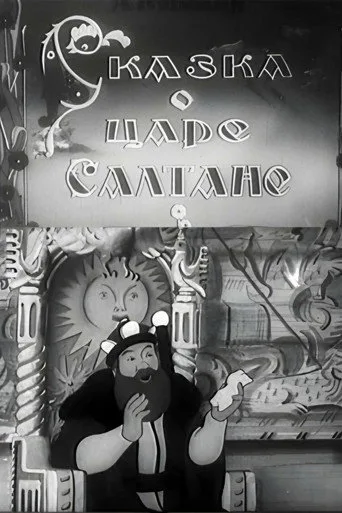
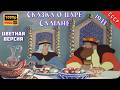
The story is about three sisters. The youngest is chosen by Tsar Saltan to be his wife. He orders the other two sisters to be his royal cook and weaver. They become jealous of their younger sister. When the tsar goes off to war, the tsaritsa gives birth to a son, Prince Gvidon (Gvidón.) The older sisters arrange to have the tsaritsa and the child sealed in a barrel and thrown into the sea. The sea takes pity on them and casts them on the shore of a remote island, Buyan. The son, having quickly grown while in the barrel, goes hunting. He ends up saving an enchanted swan from a kite bird. The swan creates a city for Prince Gvidon to rule, but he is homesick, so the swan turns him into a mosquito to help him. In this guise, he visits Tsar Saltan's court, where he stings his aunt in the eye and escapes. Back in his realm, the swan gives Gvidon a magical squirrel. But he continues to pine for home, so the swan transforms him again, this time into a fly.
Starring
Key opinion
This 1943 adaptation of Pushkin’s classic is viewed as an important, albeit technically archaic, piece of Soviet animation history. While its historical significance as a precursor to later films is acknowledged, its primitive visual style and technical limitations make it a challenging watch for general audiences.
| Originality | The film functions as a historically significant foundation that paved the way for later, more polished adaptations of the same tale. | |
| Screenplay | The grotesque characterization of the weaver and the cook lacks depth and feels overly simplistic in its execution. | |
| Production | The black-and-white visuals and antiquated sound design create a viewing experience that is difficult and sparse for modern audiences. | |
| Adaptation | The quality of the adaptation is divisive: some praise it as a noble and successful endeavor despite its naivety, while others find the creative choices—such as the voice acting—to be unpleasant or underwhelming. |