← Back to results
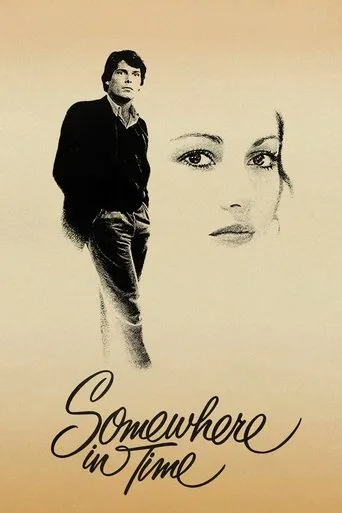
Somewhere in Time
1980 103 min United States of America PG 6+
★6.8
Drama, Fantasy, Romance
Director: Jeannot Szwarc
🎭 Based on
«Bid Time Return»
byRichard Matheson
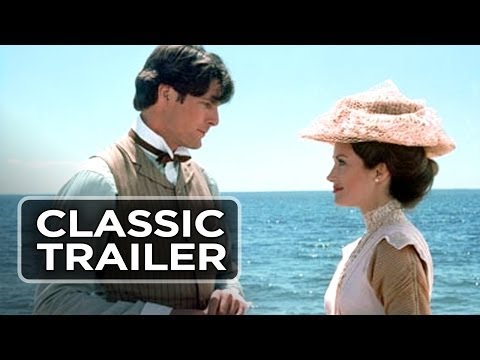
Trailers
Description
Young writer Richard Collier is met on the opening night of his first play by an old lady who begs him to "Come back to me". Mystified, he tries to find out about her, and learns that she is a famous stage actress from the early twentieth century. Becoming more and more obsessed with her, by self-hypnosis he manages to travel back in time—where he meets her.
Budget:
$5.1M
US Gross:
$9.71M
Starring
Christopher Reeve
Actor
Jane Seymour
Actor
Christopher Plummer
Actor
Awards
Saturn Awards 1981
— Best Costume Design
Saturn Awards 1981
— Best Original Score
Saturn Awards 1981
— Best Fantasy Film
Academy Awards 1981
— Best Costume Design
Golden Globe 1981
— Best Original Score
Saturn Awards 1981
— Best Fantasy Film
Saturn Awards 1981
— Best Actress
Key opinion
Somewhere in Time is a divisive, highly sentimental romantic fantasy that succeeds as a sincere tear-jerker for some while failing others as a clichéd, melodramatic project. While its technical production and musical score are widely lauded, the film's unconventional time-travel premise and emotional tone evoke polarized reactions ranging from deep immersion to complete indifference.
| Score | John Barry’s evocative score, particularly the use of Rachmaninoff, creates a powerful emotional atmosphere that elevates the film. | |
| Production | The production design, specifically the choice of the Grand Hotel location and the convincing period recreation, provides a visually stunning and immersive experience. | |
| Acting | Christopher Reeve and Jane Seymour deliver sincere, committed performances that anchor the central romance for receptive viewers. | |
| Originality | The unconventional self-hypnosis time-travel mechanism is praised by some as inventive and plausible, while others find the premise bizarre, illogical, or narratively weak. | |
| Pacing | The slow-burn, sentimental tone rewards audiences who enjoy classic melodrama, but is seen by others as manipulative, predictable, and lacking in narrative drive. | |
| Ending | The tragic, open-ended conclusion is either embraced as a poignant and poetic finale or rejected as an illogical and unsatisfying narrative failure. |