Trailers
 EN
EN
 EN
EN
 EN
EN
Description
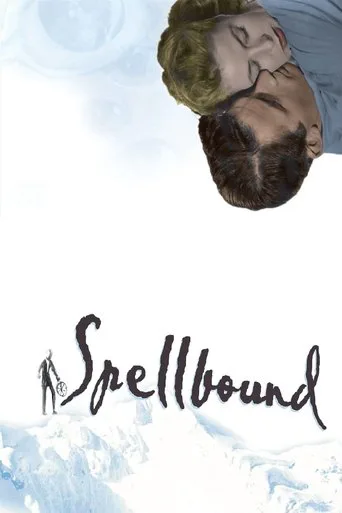
When Dr. Anthony Edwardes arrives at a Vermont mental hospital to replace the outgoing hospital director, Dr. Constance Peterson, a psychoanalyst, discovers Edwardes is actually an impostor. The man confesses that the real Dr. Edwardes is dead and fears he may have killed him, but cannot recall anything. Dr. Peterson, however is convinced his impostor is innocent of the man's murder, and joins him on a quest to unravel his amnesia through psychoanalysis.
Starring
Awards
Key opinion
Alfred Hitchcock's Spellbound is widely recognized as a pioneering psychological thriller that effectively introduced Freudian concepts to a mainstream audience. While some viewers find its reliance on dated psychoanalytic theories and stylized performances distracting, most praise the film's technical ingenuity, Salvador Dalí's iconic dream sequences, and Miklós Rózsa's evocative score.
| Acting | Mikhail Chekhov provides an exceptional, luminous, and witty performance that serves as the film's strongest acting anchor. | |
| Production | Salvador Dalí's surrealist dream sequences remain striking, artistic, and technically innovative highlights of the film. | |
| Score | Miklós Rózsa’s Oscar-winning score masterfully builds atmosphere and enhances the film's sense of menace and anticipation. | |
| Theme | The film's exploration of psychoanalysis and childhood trauma is a double-edged sword; many appreciate the intellectual ambition of bringing Freud to cinema, while others feel the narrative relies on overly simplistic and dated resolutions. | |
| Acting | Opinions on the lead performances are divided; some find Bergman and Peck compelling in their portrayal of psychological complexity, while others view their acting as too stylized, cold, or lacking in necessary charisma. |