← Back to results
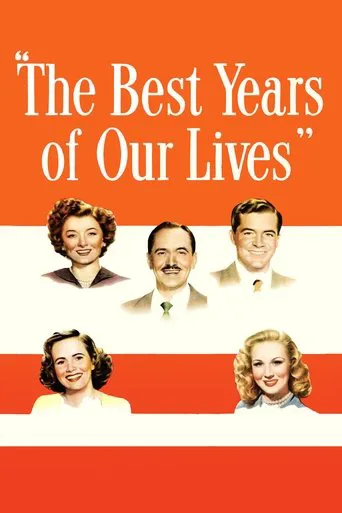
The Best Years of Our Lives
1946 171 min United States of America 12+
★8.8
Drama, Romance, War
Director: William Wyler
Trailers
 EN
EN
 EN
EN
 EN
EN
Description
It's the hope that sustains the spirit of every GI: the dream of the day when he will finally return home. For three WWII veterans, the day has arrived. But for each man, the dream is about to become a nightmare.
Budget:
$2.1M
US Gross:
$23.65M
Worldwide:
$23.65M
Starring
Myrna Loy
Actor
Dana Andrews
Actor
Fredric March
Actor
Awards
Academy Awards 1947
— Best Picture
BAFTA 1948
— Best Picture
Academy Awards 1947
— Best Director
Academy Awards 1947
— Best Supporting Actor
Academy Awards 1947
— Best Adapted Screenplay
Karlovy Vary International Film Festival 1948
— Best Director
Academy Awards 1947
— Best Actor
Academy Awards 1947
— Best Film Editing
Academy Awards 1947
— Best Score for a Drama or Comedy
Academy Awards 1947
— Best Sound
Golden Globe 1947
— Best Picture (Drama)
Key opinion
The Best Years of Our Lives is widely celebrated as a masterful, emotionally resonant portrait of post-WWII veteran reintegration. While some critics argue it leans too heavily into sentimentality and offers an overly optimistic resolution, most praise its authentic performances and nuanced handling of trauma.
| Acting | The film features universally lauded performances, particularly from Harold Russell, whose portrayal of a double amputee provides a powerful, authentic center to the story. | |
| Cinematography | Gregg Toland’s impeccable cinematography captures the emotional weight of domestic spaces and the lingering scars of war with technical mastery. | |
| Direction | William Wyler’s direction is highly regarded for its ability to balance intimate family drama with broader social themes, creating a landmark of postwar American cinema. | |
| Theme | The narrative's optimistic tone is divisive; some view it as a necessary, healing counterpoint to the era's cynicism, while others find the reliance on melodrama and happy endings somewhat reductive. | |
| Pacing | Opinions on the film's structure are split; supporters appreciate the focus on daily routines and character development, while others feel the pacing suffers from lulls and a predictable trajectory. |