Trailers
Description
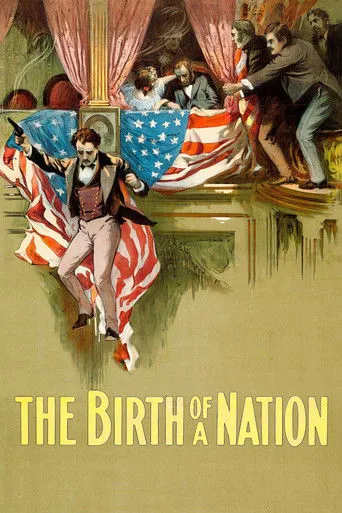
Two families, abolitionist Northerners the Stonemans and Southern landowners the Camerons, intertwine. When Confederate colonel Ben Cameron is captured in battle, nurse Elsie Stoneman petitions for his pardon. In Reconstruction-era South Carolina, Cameron founds the Ku Klux Klan, battling Elsie's congressman father and his African-American protégé, Silas Lynch.
Starring
Awards
Key opinion
D.W. Griffith's 1915 epic is widely acknowledged as a revolutionary milestone in cinema history that established the foundational language of feature-length filmmaking. However, its profound historical and technical influence is deeply overshadowed by its explicit, virulent racism, leading to a polarized legacy that functions more as a studied artifact than an accessible drama for modern viewers.
| Direction | The film pioneered essential cinematic techniques including parallel editing, close-ups, and large-scale, immersive battle choreography that established the modern Hollywood aesthetic. | |
| Production | The massive scale of production, featuring unprecedented numbers of extras and meticulous historical set design, remains a technical masterwork for its time. | |
| Acting | The acting style relies on the theatrical, exaggerated gestures typical of the silent era, which demands a period of adjustment for contemporary audiences. | |
| Theme | The film's racial ideology is sharply divided; some viewers interpret the violence and KKK portrayal as a purely artistic or anti-war warning, while many others identify it as overt, harmful white supremacist propaganda. | |
| Runtime | The three-hour runtime is often described as an endurance test, rewarding those interested in historical technical innovation but proving exhausting for general viewers. |