← Back to results
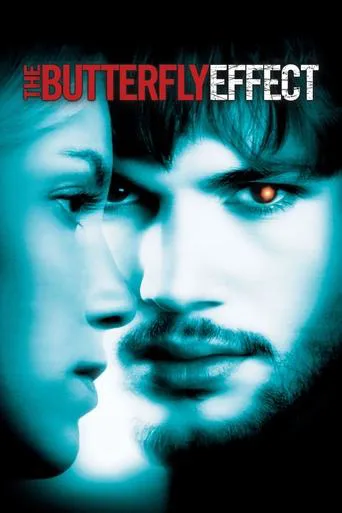
The Butterfly Effect
2004 113 min Canada, United States of America R 16+
★6.7
Science Fiction, Thriller
Director: Eric Bress, J. Mackye Gruber
Trailers
 EN
EN
 EN
EN
Description
A young man struggles to access sublimated childhood memories. He finds a technique that allows him to travel back into the past, to occupy his childhood body and change history. However, he soon finds that every change he makes has unexpected consequences.
Budget:
$13M
US Gross:
$57.94M
Worldwide:
$96.8M
Starring
Ashton Kutcher
Actor
Amy Smart
Actor
Melora Walters
Actor
Awards
Saturn Awards 2005
— Best Science Fiction Film
Key opinion
The Butterfly Effect is widely regarded as a compelling and emotionally resonant thriller that effectively explores the philosophical implications of chaos theory. While some critics dismiss it as melodramatic or reliant on plot holes, audiences consistently praise its non-linear narrative, powerful soundtrack, and the surprising depth of Ashton Kutcher's lead performance.
| Theme | The film's exploration of chaos theory—demonstrating how small, localized changes trigger massive, unintended consequences—serves as a gripping and thought-provoking narrative foundation. | |
| Score | The soundtrack is frequently highlighted as a standout element, effectively building atmosphere and enhancing the emotional weight of the protagonist's journey. | |
| Screenplay | The non-linear, portmanteau-style structure keeps the tension high, successfully rewarding viewers who commit to its complex, puzzle-like plot progression. | |
| Acting | Ashton Kutcher’s performance is a major point of contention: many viewers find his dramatic portrayal of a tortured, obsessive protagonist to be his career-best, while detractors label the performance as wooden or unconvincing. | |
| Emotion | The film’s tone and aesthetic choices—ranging from effective dark drama to accusations of relying on gratuitous violence and shock-value tropes—divide viewers on whether the darker elements are meaningful or purely exploitative. | |
| Ending | The Director’s Cut is overwhelmingly cited as the superior version, with many arguing that its specific narrative additions and alternative finale provide a necessary, stronger conclusion that the theatrical release lacked. |