← Back to results
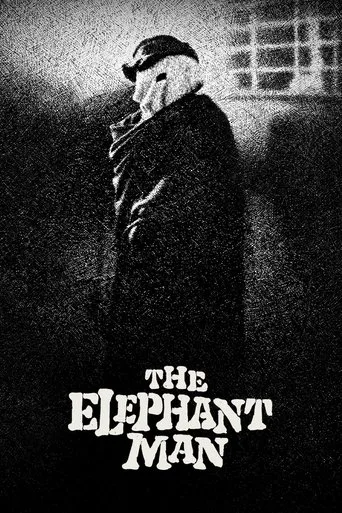
The Elephant Man
1980 124 min United States of America PG 18+
★8.5
Drama, History
Director: David Lynch
Trailers
 EN
EN
 EN
EN
 EN
EN
 EN
EN
 EN
EN
 EN
EN
 EN
EN
 EN
EN
 EN
EN
 EN
EN
Description
A Victorian surgeon rescues a heavily disfigured man being mistreated by his "owner" as a side-show freak. Behind his monstrous façade, there is revealed a person of great intelligence and sensitivity. Based on the true story of Joseph Merrick (called John Merrick in the film), a severely deformed man in 19th century London.
Budget:
$5M
US Gross:
$26.01M
Worldwide:
$26M
Starring
Anthony Hopkins
Actor
John Hurt
Actor
Anne Bancroft
Actor
Awards
BAFTA 1981
— Best Picture
BAFTA 1981
— Best Actor
César Awards 1982
— Best International Feature Film
Golden Globe 1981
— Best Screenplay
BAFTA 1981
— Best Director
BAFTA 1981
— Best Cinematography
BAFTA 1981
— Best Film Editing
Academy Awards 1981
— Best Actor
Academy Awards 1981
— Best Director
Academy Awards 1981
— Best Adapted Screenplay
Academy Awards 1981
— Best Costume Design
Academy Awards 1981
— Best Film Editing
Academy Awards 1981
— Best Original Score
Golden Globe 1981
— Best Actor (Drama)
Golden Globe 1981
— Best Picture (Drama)
Golden Globe 1981
— Best Director
BAFTA 1981
— Best Production Design
BAFTA 1981
— Best Screenplay
Academy Awards 1981
— Best Production Design
Academy Awards 1981
— Best Picture
Key opinion
David Lynch’s The Elephant Man is widely regarded as a profound and emotionally resonant masterpiece that masterfully contrasts Victorian-era societal cruelty with the inner beauty of John Merrick. Critics and audiences alike praise the sensitive direction and powerful performances, resulting in a timeless meditation on human dignity.
| Acting | John Hurt’s performance remains transcendent, conveying deep soulfulness and physical agony despite the heavy constraints of the prosthetic makeup. | |
| Acting | Anthony Hopkins delivers a masterfully grounded and noble portrayal of Dr. Treves, serving as the moral anchor of the narrative. | |
| Cinematography | The stark black-and-white cinematography heightens the film's atmospheric, Victorian-era setting and reinforces its somber tone. | |
| Direction | Lynch’s direction succeeds in unifying the narrative, shifting focus from the protagonist's grotesque exterior to his internal human experience. | |
| Emotion | The emotional impact is profound and deeply moving, though the unrelenting depiction of human cruelty renders the viewing experience heavy and occasionally exhausting. |