← Back to results
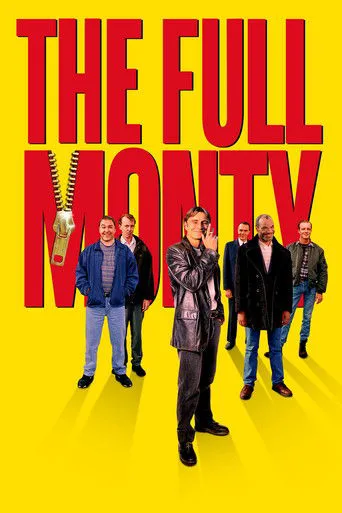
The Full Monty
1997 91 min United Kingdom R 18+
★8.1
Comedy
Director: Peter Cattaneo
Trailers

Description
Sheffield, England. Gaz, a jobless steelworker in need of quick cash persuades his mates to bare it all in a one-night-only strip show.
Budget:
$3.5M
US Gross:
$45.95M
Worldwide:
$257.85M
Starring
Robert Carlyle
Actor
Tom Wilkinson
Actor
Mark Addy
Actor
Awards
Screen Actors Guild Awards 1998
— Best Cast Ensemble
Goya Awards 1998
— Best European Film
MTV Movie & TV Awards 1998
— Best Debut Director
Goya Awards 1998
— Best European Film
MTV Movie & TV Awards 1998
— Best Debut Director
Academy Awards 1998
— Best Director
European Film Awards 1997
— Audience Award – Best Film
San Sebastián International Film Festival 1997
— OCIC Award
Academy Awards 1998
— Best Screenplay
BAFTA 1998
— Best Actor
Academy Awards 1998
— Best Score for a Comedy or Musical
Academy Awards 1998
— Best Picture
BAFTA 1998
— Best Supporting Actress
BAFTA 1998
— Best Sound
BAFTA 1998
— Best Film Editing
César Awards 1998
— Best International Feature Film
BAFTA 1998
— Best Picture
BAFTA 1998
— Best Supporting Actor
BAFTA 1998
— Audience Award
BAFTA 1998
— Best Original Screenplay
BAFTA 1998
— Alexander Korda Award for Outstanding British Film
BAFTA 1998
— David Lean Award for Direction
BAFTA 1998
— Anthony Asquith Award for Film Music
European Film Awards 1997
— Best Picture
Key opinion
The Full Monty is widely regarded as a poignant and uplifting British comedy that balances social commentary on the decline of the steel industry with the humorous, desperate measures taken by unemployed men. While critics largely celebrate its authentic character work and memorable soundtrack, some find its plot trajectory simplistic or its humor overly specific to its regional cultural context.
| Acting | The film features strong, committed performances that elevate the material, with Robert Carlyle and Tom Wilkinson receiving specific praise for their roles. | |
| Score | The soundtrack, featuring iconic 70s and 80s hits, is consistently lauded as a highlight that effectively reinforces the film’s tone. | |
| Screenplay | The screenplay provides depth to its ensemble of characters, finding a successful balance between dark humor and the serious economic reality of Thatcher-era Sheffield. | |
| Humor | While many praise the subtle British humor, others find the comedy hit-or-miss, noting that its regional linguistic nuances and specific cultural references may be lost on non-British audiences. | |
| Pacing | The pacing is a point of contention; supporters appreciate the efficient, punchy delivery, while detractors feel the tempo occasionally sags or relies on an underdeveloped, thin plot. |