← Back to results
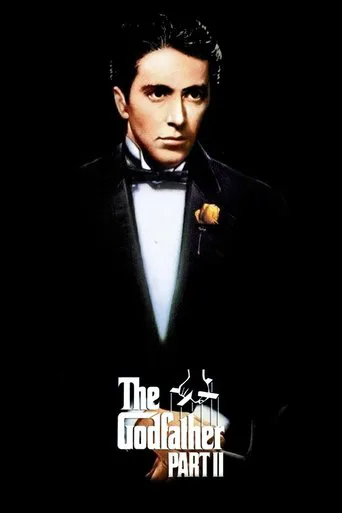
The Godfather Part II
1974 202 min United States of America R 18+
★9.4
Drama, Crime
Director: Francis Ford Coppola
🎭 Based on
«The Godfather»
byMario Puzo
Trailers
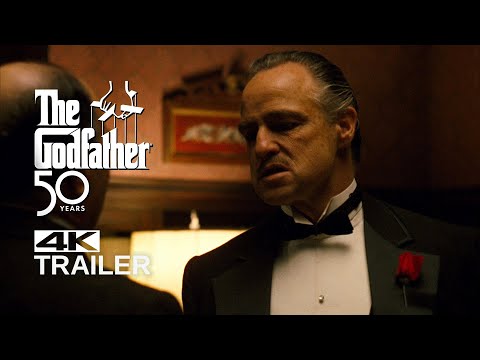
 EN
EN
 EN
EN
Description
In the continuing saga of the Corleone crime family, a young Vito Corleone grows up in Sicily and in 1910s New York. In the 1950s, Michael Corleone attempts to expand the family business into Las Vegas, Hollywood and Cuba.
Budget:
$13M
US Gross:
$47.83M
Worldwide:
$102.6M
Starring
Al Pacino
Actor
Robert De Niro
Actor
Robert Duvall
Actor
Awards
Academy Awards 1975
— Best Picture
Academy Awards 1975
— Best Director
Academy Awards 1975
— Best Adapted Screenplay
Golden Globe 1975
— Best Debut
BAFTA 1976
— Best Film Editing
Academy Awards 1975
— Best Costume Design
Golden Globe 1975
— Best Picture (Drama)
Golden Globe 1975
— Best Actor (Drama)
Academy Awards 1975
— Best Director
Academy Awards 1975
— Best Adapted Screenplay
Academy Awards 1975
— Best Supporting Actress
BAFTA 1976
— Anthony Asquith Award for Film Music
Academy Awards 1975
— Best Production Design
Academy Awards 1975
— Best Score for a Drama
Academy Awards 1975
— Best Actor
Academy Awards 1975
— Best Supporting Actor
Golden Globe 1975
— Best Director
Golden Globe 1975
— Best Screenplay
Key opinion
The Godfather Part II is widely considered a cinematic masterpiece that functions as a rare, superior sequel to the original. By interweaving the parallel narratives of Vito Corleone’s rise and Michael Corleone’s moral disintegration, the film offers a profound, tragic examination of power and family.
| Acting | Al Pacino delivers a compelling performance that captures Michael Corleone's tragic shift from a protective family man to a ruthless, isolated figure. | |
| Acting | Robert De Niro’s portrayal of young Vito Corleone is highly acclaimed, providing a grounded and charismatic foundation for the prequel narrative. | |
| Screenplay | The narrative structure, which intercuts the origins of the father with the moral collapse of the son, is praised for its thematic elegance and emotional depth. | |
| Score | Nino Rota’s score is lauded for its evocative, haunting contribution to the film's atmosphere. | |
| Runtime | The extensive runtime is viewed by most as necessary for the film's epic scale and pacing, though a minority of viewers find the contemplative tempo tedious or boring. | |
| Editing | The non-linear editing style is appreciated for unifying the two storylines, while some critics find the transitions between past and present occasionally disjointed or uneven. |