Trailers

 EN
EN
 EN
EN
Description
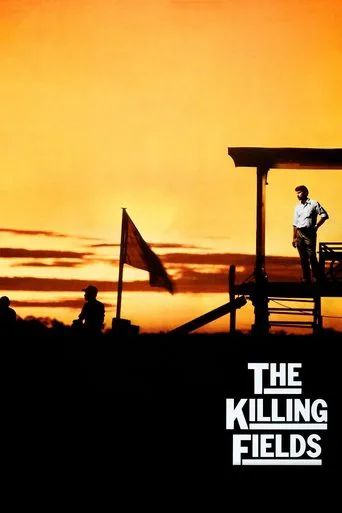
New York Times reporter Sydney Schanberg is on assignment covering the Cambodian Civil War, with the help of local interpreter Dith Pran and American photojournalist Al Rockoff. When the U.S. Army pulls out amid escalating violence, Schanberg makes exit arrangements for Pran and his family. Pran, however, tells Schanberg he intends to stay in Cambodia to help cover the unfolding story — a decision he may regret as the Khmer Rouge rebels move in.
Starring
Awards
Key opinion
The Killing Fields is widely regarded as a powerful, humanist depiction of the Cambodian genocide that excels through its raw atmosphere and the authentic performance of Haing S. Ngor. While many critics praise its historical gravity and directorial restraint, a minority of viewers find the narrative pacing uneven and the character development lacking.
| Acting | Haing S. Ngor provides an incredibly authentic central performance, anchored by his own lived experience as a prisoner of the Khmer Rouge. | |
| Direction | Roland Joffé’s direction effectively balances raw historical horror with restraint, favoring atmospheric tension over graphic violence. | |
| Cinematography | The cinematography is visually striking and plays a vital role in grounding the film's historical setting. | |
| Score | The score by Mike Oldfield is generally praised for its effectiveness, though some find the musical choices occasionally heavy-handed. | |
| Pacing | The film's pacing divides audiences: some find the slow, dense opening rewarding for the subsequent emotional payoff, while others view it as dull and bloated. | |
| Screenplay | The screenplay is praised by supporters for its organic development and historical commitment, but criticized by others for narrative incoherence and an undefined protagonist. |