← Back to results
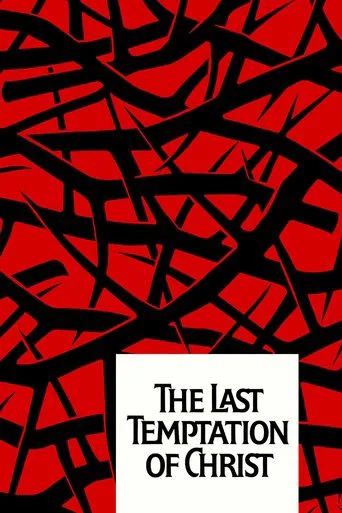
The Last Temptation of Christ
1988 164 min United States of America, Canada R 16+
★7.9
Drama
Director: Martin Scorsese
🎭 Based on
«The Last Temptation of Christ»
byNikos Kazantzakis
Trailers

 EN
EN
 EN
EN
 EN
EN
Description
Jesus, a humble Judean carpenter beginning to see that he is the son of God, is drawn into revolutionary action against the Roman occupiers by Judas -- despite his protestations that love, not violence, is the path to salvation. The burden of being the savior of mankind torments Jesus throughout his life, leading him to doubt.
Budget:
$7M
US Gross:
$8.37M
Worldwide:
$33.77M
Starring
Willem Dafoe
Actor
Harvey Keitel
Actor
Paul Greco
Actor
Awards
Academy Awards 1989
— Best Director
Golden Globe 1989
— Best Supporting Actress
Razzie Awards 1989
— Worst Supporting Actor
Golden Globe 1989
— Best Original Score
Key opinion
Martin Scorsese's adaptation of The Last Temptation of Christ is a polarizing, provocative, and deeply humanistic exploration of the divine. While many praise its intellectual depth and the powerful performances of its lead actors, others feel the film distorts the source material or offers a superficial and inconsistent portrayal of its central figure.
| Acting | Willem Dafoe and Harvey Keitel deliver compelling, distinct portrayals that serve as the emotional bedrock of the film. | |
| Ending | The final act provides a provocative and psychologically resonant exploration of Jesus’ humanity through the lens of his final temptation. | |
| Production | The film’s historical realism and gritty, sensory aesthetic create a memorable, grounded atmosphere that distances the narrative from traditional, reverent depictions. | |
| Screenplay | The screenplay is viewed by some as a profound, philosophically challenging interrogation of faith, while others dismiss it as an oversimplified or distortive adaptation of Kazantzakis. | |
| Pacing | The film’s pacing is a point of contention, with some viewers finding the contemplative, deliberate tempo exhausting and sluggish. | |
| Theme | Audiences and critics are split on the film's thematic depth; proponents see a serious moral exploration of divinity, whereas critics argue it lacks genuine philosophical insight or respect for the subject matter. |