Trailers
 EN
EN
 Teaser
 Teaser
 Teaser
 Teaser
 EN
EN
 EN
EN
Description
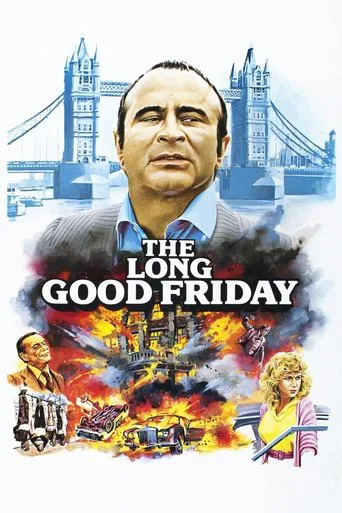
In the late 1970s, Cockney crime boss Harold Shand, a gangster trying to become a legitimate property mogul, has big plans to get the American Mafia to bankroll his transformation of a derelict area of London into the possible venue for a future Olympic Games. However, a series of bombings targets his empire on the very weekend the Americans are in town. Shand is convinced there is a traitor in his organization, and sets out to eliminate the rat in typically ruthless fashion.
Starring
Awards
Key opinion
The Long Good Friday is widely regarded as a seminal piece of British crime cinema that elevated the gangster genre through gritty realism and a sophisticated script. Anchored by Bob Hoskins' powerhouse performance and supported by Helen Mirren, the film remains culturally significant for its exploration of the tension between criminal pasts and the desire for legitimacy.
| Acting | Bob Hoskins anchors the film with a compelling, powerhouse performance that captures both the menace and vulnerability of a gangster facing the erosion of his power. | |
| Acting | Helen Mirren delivers a standout turn as a sophisticated, composed partner whose emotional influence provides a vital counterbalance to Hoskins’ volatility. | |
| Screenplay | The script effectively bridges the gap between traditional mob tropes and modern geopolitical themes, creating a narrative that remains relevant and intellectually engaging. | |
| Direction | John Mackenzie’s direction, characterized by its gritty realism and intense period atmosphere, served as a foundational influence for the later stylistic evolution of British crime cinema. | |
| Pacing | The film’s pacing is viewed by many as taut and immersive, though some viewers find the balance between its deliberate, dialogue-heavy setup and its sudden shifts into violence to be occasionally uneven. |